
- All
- Product Name
- Product Keyword
- Product Model
- Product Summary
- Product Description
- Multi Field Search
Views: 0 Author: Site Editor Publish Time: 2026-04-23 Origin: Site
Are you curious about how electric vehicles charge? The on-board charger (OBC) is a key component in this process. It takes the AC power from charging stations and converts it into DC power, which is essential for charging an EV battery. In this article, we will discuss the function, components, and importance of an on-board charger. You will learn how it ensures safe, efficient charging for your electric vehicle and the factors to consider when selecting the right OBC for your needs.
An on-board charger (OBC) is a key component found inside electric vehicles (EVs). Its primary function is to convert alternating current (AC) from an external power source into direct current (DC), which is stored in the vehicle's battery. This process is crucial because electric vehicle batteries only store DC power, yet the power supplied from most charging stations is AC. The OBC ensures that the power from the grid is transformed and optimized for battery charging.
Without the OBC, the vehicle would not be able to accept and safely store energy from the external charging system. The charger communicates with the vehicle’s Battery Management System (BMS) to control the charging process, ensuring that the battery is charged at the correct voltage and current levels, maximizing the battery's life and performance.
The conversion process from AC to DC is a detailed and highly regulated operation that ensures the battery receives the correct type of energy. Here's how it works:
AC Input: The charger receives alternating current (AC) from a charging station or home wall outlet.
Rectification: The OBC uses a component called a rectifier to convert AC into DC. This is done by using diodes or semiconductor-based active components that allow current to flow in only one direction.
Power Factor Correction (PFC): After rectification, the power factor correction is applied to smooth out any fluctuations in power and ensure that the DC current is stable and efficient.
DC Output: Finally, the converted DC power is sent to the vehicle’s battery for charging.
The OBC also plays an important role in protecting the battery from issues like overcharging or overheating. It works with the vehicle's BMS to monitor the battery’s state of charge (SOC) and adjust the charging process accordingly.
Key Components Involved in Conversion:
| Component | Role in OBC Conversion |
|---|---|
| Rectifiers | Convert AC to DC |
| Power Factor Correction (PFC) | Ensures efficient conversion and reduces energy loss |
| Battery Management System (BMS) | Controls charging rate and protects the battery |
| Cooling System | Prevents overheating during charging |
By managing the flow of electricity and maintaining proper charging conditions, the OBC helps prolong the life of both the charger and the vehicle's battery.
In addition to the core functions, modern OBCs are often designed with additional features like bidirectional charging (vehicle-to-grid), which allows power to flow back from the vehicle to the grid. This feature is part of the ongoing trend to make EVs more integrated with smart grids and renewable energy sources.
The on-board charger is essential for the functionality and convenience of electric vehicles. Here's why:
Safety: The OBC ensures that the charging process is safe by managing the current and voltage levels that go into the battery. This prevents issues such as overcharging, which can damage the battery and reduce its lifespan.
Efficiency: By converting the energy from AC to DC inside the vehicle, OBCs prevent the need for large and costly external DC charging stations. This makes home charging feasible for most EV owners.
Versatility: The OBC allows vehicles to charge from a wide variety of power sources, including public charging stations and home outlets. It adjusts to the specific requirements of the vehicle, ensuring that it charges in the most efficient manner possible.
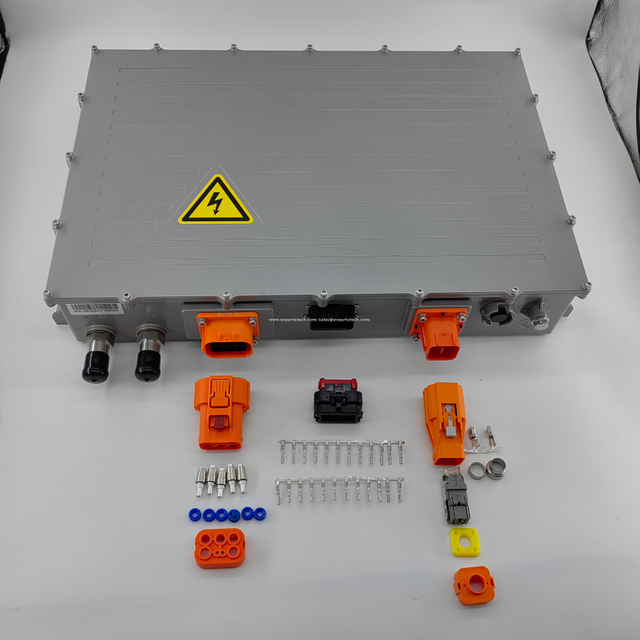
The distinction between single-phase and three-phase chargers comes down to how the electrical power is delivered and converted.
Single-phase charging uses a two-wire system (live and neutral) to provide power from the grid. This setup is typically found in residential areas and is ideal for lower power levels (e.g., 3.7 kW or 7.4 kW). It is slower compared to three-phase systems and may take several hours to fully charge an EV battery. This type is the most economical and easiest to install, but it is best for users who have overnight charging needs.
Three-phase charging, on the other hand, uses three wires and provides more power by delivering current in three phases. It is typically used in commercial or public charging settings and offers faster charging speeds, commonly ranging from 11 kW to 22 kW. This system can charge an EV more efficiently and is suitable for higher-capacity batteries, providing faster turnaround times.
The power capacity of an on-board charger (OBC) is directly related to how quickly it can charge a vehicle. The higher the power output, the faster the charging time. Below is a breakdown of common power capacities and their influence on charging speed:
| Power Output | Typical Charging Time | Vehicle Range per Hour |
|---|---|---|
| 3.7 kW | 20+ hours | 10-20 miles |
| 6.6 kW | 8-12 hours | 20-30 miles |
| 10 kW | 4-6 hours | 30-40 miles |
| 22 kW | 2-3 hours | 50-60 miles |
The vehicle range and charging speed depend on several factors, including the battery size and the charger’s power capacity. A higher power output results in faster charging, which is especially beneficial for larger battery EVs or for commercial fleets that need to reduce downtime.
There are three primary types of charging options for electric vehicles: Level 1, Level 2, and DC Fast Charging (DCFC). Each has its own advantages and use cases:
Level 1 Charging:
AC power, typically from a 120V outlet(household plug).
Power capacity: 1.4 kW to 2.5 kW.
Charging speed: Very slow, providing only 2-5 miles of range per hour of charging.
Ideal for overnight charging at home, where long charging times are acceptable.
Level 2 Charging:
AC power, usually from a 240V outlet.
Power capacity: 3.7 kW to 22 kW.
Charging speed: Faster than Level 1, adding 10-60 miles of range per hour depending on the power capacity.
Most commonly used for home charging (Level 2), but also found at public charging stations.
DC Fast Charging (DCFC):
DC power, bypasses the on-board charger (OBC) and directly sends DC to the vehicle’s battery.
Power capacity: 50 kW to 350 kW.
Charging speed: Very fast, providing up to 80% charge in 20-30 minutes.
Best suited for commercial charging stations and high-use scenarios like highways, where quick turnaround times are necessary.
How OBCs Interact with Level 1 and Level 2 Chargers:
Level 1 and Level 2 chargers both rely on the on-board charger (OBC) to convert AC power into DC power for the vehicle’s battery.
DC Fast Charging bypasses the OBC and delivers DC power directly to the battery, enabling rapid charging without the need for conversion inside the vehicle.
An on-board charger (OBC) is not just a piece of equipment that converts power from the grid to the vehicle's battery. It also ensures safety and charging efficiency throughout the process. Several safety mechanisms are integrated into the OBC to prevent overcharging, overheating, and other risks that can damage the battery or pose a safety hazard.
Overcharging Prevention: Modern OBCs are equipped with voltage regulation systems to prevent the battery from being charged beyond its capacity. They work in tandem with the vehicle's Battery Management System (BMS) to monitor the state of charge (SOC) and adjust the charging process accordingly.
Thermal Management: As the OBC works to convert AC to DC power, it generates heat. Effective thermal management systems, such as heat sinks or liquid cooling systems, are essential to maintain the right operating temperature. These systems help prevent the OBC from overheating, which could otherwise damage internal components or reduce the efficiency of the charging process.
Battery Life Optimization: An OBC not only manages the charging speed but also ensures that the battery is charged within the optimal parameters. This prevents fast charging that could degrade the battery's health over time, improving the longevity of the battery and making sure that charging is done in the most efficient manner.
One of the key features of an on-board charger is its ability to make the vehicle compatible with various charging stations worldwide. EVs need to be able to communicate with different types of chargers, which is why the OBC’s compatibility with various charging standards is so important.
Adjusting to Different Charging Standards: On-board chargers are built to handle different charging protocols such as J1772 for AC charging or CCS (Combined Charging System) for DC fast charging. This allows the OBC to adjust the power flow, ensure the correct voltage and current for the vehicle’s battery, and maintain safety protocols during the charging process.
Global Compatibility: As more countries implement EV infrastructure, ensuring that your vehicle is compatible with international charging standards is essential. OBCs play a crucial role in making sure that vehicles can be plugged into a variety of chargers in different regions, whether that’s a Level 1 charger in the U.S. or a DC fast charger in Europe. This flexibility is key to the growing adoption of electric vehicles, as it makes charging accessible worldwide.
Selecting the right on-board charger (OBC) for your electric vehicle is essential for ensuring efficient and convenient charging. Here are the main factors you should consider:
Power Capacity: The power capacity of the OBC plays a major role in how quickly it can charge your EV. It is crucial to match the charger’s power output to your vehicle’s battery capacity and charging requirements. For instance, if you drive a vehicle with a large battery, opting for a higher power charger like 10 kW or 22 kW will help significantly reduce the charging time. Smaller vehicles with smaller batteries may only need a 3.7 kW or 6.6 kW charger.
Voltage and Current Compatibility: Different EVs use different battery voltage systems (e.g., 48V, 96V, 400V). The OBC must be compatible with your vehicle’s voltage and current specifications to charge efficiently without risking damage to the battery or vehicle electronics.
Charging Speed: The charging speed is one of the most significant factors affecting your daily use of the EV. A higher power OBC allows for faster charging, reducing downtime. If you have long trips ahead, a higher power charger will help top off the battery more quickly, while slower chargers like Level 1 may be fine for overnight charging at home.
When choosing an OBC, you will typically decide between integrated OBCs (those built into the vehicle) and aftermarket OBCs (sold separately). Both types have their own pros and cons depending on your needs:
Integrated OBCs: These chargers are already installed in the vehicle, making them highly efficient and space-saving. They are designed to work seamlessly with the vehicle's existing systems and are typically reliable. However, the downside is that the power output of integrated OBCs may be limited compared to aftermarket options, and upgrading may not be possible without replacing the whole OBC.
Aftermarket OBCs: These chargers provide more flexibility and customizability. You can choose an OBC with higher power ratings, such as those offering fast charging capabilities. Aftermarket OBCs can be replaced or upgraded over time. However, they might require professional installation and could void warranties if not correctly integrated with the vehicle’s system.
An on-board charger (OBC) is a vital component in electric vehicles that converts AC power from the grid into DC power for the vehicle's battery. It ensures safe, efficient charging and is crucial for maintaining battery life. OBCs vary in power capacity, ranging from 3.7 kW to 22 kW, with the charger’s capacity directly affecting the charging speed. Keller’s OBC solutions offer reliable and efficient charging for various EV applications, with features like CAN bus compatibility, IP67 protection, and liquid cooling, ensuring that vehicles charge safely and quickly.
A: An on-board charger (OBC) converts AC power to DC power to charge an electric vehicle's battery.
A: It uses rectifiers and power factor correction to convert AC to DC, ensuring safe and efficient battery charging.
A: Without an OBC, EVs wouldn’t be able to charge from most standard charging stations as it converts AC to DC for the battery.
A: Single-phase chargers are slower and often used at home, while three-phase chargers are faster and ideal for commercial use.
A: Keller’s OBCs offer high power output, compatibility with various charging stations, and reliable thermal management, providing fast, efficient, and safe charging solutions for EVs.


