
- All
- Product Name
- Product Keyword
- Product Model
- Product Summary
- Product Description
- Multi Field Search
Views: 0 Author: Site Editor Publish Time: 2026-02-10 Origin: Site


Ever wondered why fast charging feels confusing? Level 3 ev charging is common, yet often misunderstood.Many drivers hear the term ev charging every day. Few know what Level 3 really means in practice.In this article, you will learn what a Level 3 EV charging station is. You will also see how it fits into everyday ev charging.
Level 3 EV charging sits at the top of the current ev charging hierarchy and is designed with a very different goal from lower charging levels. Instead of focusing on convenience over long parking durations, Level 3 charging prioritizes speed and energy throughput. Its role is to restore a meaningful amount of driving range in a short period of time, which is why it is most commonly associated with highway stops, urban fast-charging hubs, and commercial operations. Understanding this role is essential, because Level 3 ev charging is not meant to replace everyday charging, but to fill the gaps where slower charging is impractical.
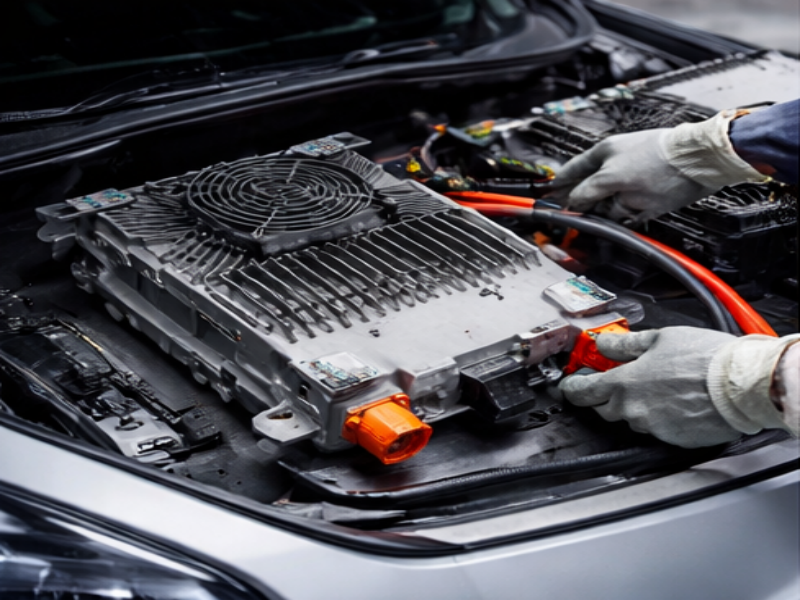
At a system level, the most important difference lies in how energy flows from the grid to the vehicle battery. Level 1 and Level 2 charging are built around alternating current (AC), which must be converted by the vehicle’s onboard charger before it can be stored. This design works well for overnight or long-duration charging but naturally limits power output. Level 3 ev charging changes this architecture by performing the AC-to-DC conversion inside the charging station itself, allowing direct current (DC) to be delivered straight to the battery at much higher power levels.
From a design perspective, this difference leads to several practical outcomes. Level 3 charging stations are physically larger, require industrial-grade electrical connections, and incorporate advanced cooling systems to manage heat. In contrast, Level 1 and Level 2 chargers are compact and simpler, reflecting their role in slower, routine charging. These structural differences explain why Level 3 chargers are deployed selectively rather than everywhere electricity is available.
EV Charging Level | Energy Conversion Location | Typical Power Range | Design Focus |
Level 1 | Inside the vehicle | ~1–2 kW | Simplicity and low cost |
Level 2 | Inside the vehicle | ~7–22 kW | Daily usability and flexibility |
Level 3 | Inside the charging station | ~50–350 kW | Speed and high energy transfer |
This comparison highlights that Level 3 ev charging is purpose-built for fast replenishment, not incremental charging. Its design reflects the assumption that time is limited and energy demand is high.
The term “DC fast charging” is widely used because it captures the defining technical feature of Level 3 ev charging: direct current delivery. Electric vehicle batteries can only store DC power, which means conversion is unavoidable at some point. What makes Level 3 different is where this conversion happens. By shifting the process out of the vehicle and into the station, Level 3 charging avoids the constraints of onboard chargers, which are typically designed for lower power levels.
This DC-based approach also explains why charging behavior looks different at Level 3 stations. Charging speed is not constant from start to finish; instead, it follows a curve that prioritizes rapid energy delivery at lower battery states before slowing down as the battery fills. This characteristic is a direct result of battery chemistry and thermal management, not a limitation of ev charging infrastructure itself. As a result, DC fast charging is optimized for short, efficient sessions rather than full charges.
In real-world use, Level 3 ev charging is most valuable when charging time directly affects mobility or operations. Long-distance travel is the clearest example, as drivers stopping along highways typically need enough range to reach their next destination rather than a full battery. Urban drivers without access to home charging may also rely on Level 3 stations for quick top-ups during short stops, such as shopping or transit breaks.
Commercial and fleet use cases further illustrate where Level 3 fits best. Vehicles with high daily mileage—such as delivery vans, ride-hailing cars, or service fleets—benefit from reduced downtime and predictable charging windows. In contrast, Level 1 and Level 2 charging remain better suited for environments where vehicles are parked for extended periods, such as overnight at home or during a full workday. Seen this way, Level 3 ev charging is not an upgrade path that replaces other levels, but a specialized tool within a balanced ev charging strategy.
Level 3 EV charging achieves its speed advantage by rethinking where power conversion happens, how charging is controlled, and how energy is delivered over time. Unlike slower ev charging methods that prioritize simplicity and long dwell times, Level 3 systems are engineered to move large amounts of energy quickly while maintaining safety and battery health. Understanding how these elements work together explains not only why Level 3 charging is fast, but also why its performance varies in real-world conditions.
At the heart of Level 3 ev charging is the relocation of power conversion. Electricity from the grid always arrives as alternating current (AC), while EV batteries can only accept direct current (DC). With Level 1 and Level 2 charging, this conversion happens inside the vehicle through the onboard charger, which is limited in size and power capacity. Level 3 charging stations move this process outside the vehicle, converting AC to DC within the station itself and delivering DC power directly to the battery.
By bypassing the onboard charger, Level 3 systems remove a major bottleneck in ev charging. External power electronics can be much larger and more powerful, allowing charging rates that would be impractical inside a vehicle. This design also explains why Level 3 charging equipment is physically larger and requires advanced cooling and high-capacity electrical connections. The result is a charging setup optimized for speed rather than compactness or residential compatibility.
Even though the charging station supplies high-power DC electricity, the vehicle is never a passive recipient. The battery management system (BMS) continuously communicates with the Level 3 charger, acting as a gatekeeper for battery safety and longevity. This communication determines how much power the vehicle will accept at any given moment, based on real-time conditions inside the battery pack.
The BMS monitors multiple parameters simultaneously, including cell temperature, voltage balance, and state of charge. If any of these values approach safe limits, the system automatically reduces charging power. This is why two vehicles using the same Level 3 ev charging station can experience very different charging speeds. The station offers capability, but the vehicle’s BMS decides how aggressively that capability can be used.
Typical responsibilities of the BMS during Level 3 charging include:
● Regulating current to prevent overheating
● Adjusting voltage as the battery fills
● Protecting long-term battery health during repeated fast charging
Level 3 ev charging does not deliver power at a constant rate from start to finish. Instead, it follows a charging curve that reflects how lithium-ion batteries behave under high power. When the battery is at a low state of charge, it can accept energy rapidly and safely, allowing the charger to operate near its maximum output. This is the phase where Level 3 charging feels exceptionally fast.
As the battery approaches higher charge levels—commonly around 70–80%—the situation changes. Internal resistance increases, heat management becomes more critical, and precise control is required to avoid degradation. At this stage, the BMS gradually reduces charging power, causing a noticeable slowdown. This behavior is intentional and essential for battery safety, not a flaw in ev charging infrastructure.
A simplified view of the Level 3 charging curve looks like this:
● Low state of charge: maximum or near-maximum charging power
● Mid-range charge: controlled high-speed charging
● High state of charge (around 80%+): progressively reduced power
This is why Level 3 ev charging is most efficient for short, targeted sessions rather than charging to 100%.
In practice, the speed of Level 3 ev charging depends on a combination of vehicle capabilities, environmental conditions, and station characteristics. These factors interact dynamically, which explains why advertised charging speeds are not always achieved in everyday use.
Influencing Factor | How It Affects Charging Speed |
Vehicle maximum charging rate | Sets an upper limit regardless of station capacity |
Battery temperature | Cold or overheated batteries charge more slowly |
State of charge | Lower states allow faster charging than near-full levels |
Charger power rating | Determines the maximum power the station can supply |
Power sharing at the station | Multiple vehicles may reduce available power per charger |
For electric vehicle drivers, Level 3 ev charging is mainly about access and compatibility. Unlike slower ev charging options that can be used almost anywhere a car is parked, Level 3 charging is encountered in specific places and only works with EVs that support DC fast charging. Understanding both points helps drivers avoid confusion when planning trips or searching for fast chargers.
From a driver’s perspective, Level 3 ev charging compatibility comes down to two things: whether the EV supports DC fast charging and how much power the vehicle can actually accept. Most modern battery electric vehicles support Level 3 charging, but charging speed varies widely depending on vehicle design and battery technology.
What matters most for EV owners is not the charger’s maximum rating, but the car’s own limits. Even at a high-power station, the vehicle controls how much energy it takes in. Checking your EV’s peak DC charging rate gives a much clearer expectation of real-world charging speed than looking at station specs alone.
Key compatibility points for EV drivers include:
● DC fast charging support (required for Level 3 ev charging)
● Maximum DC charging power the vehicle can accept
● Software support for public fast-charging communication
Connector standards determine whether an electric vehicle can physically plug into a Level 3 charging station. For most drivers, this is the most immediate compatibility issue they encounter. Knowing which connector your EV uses makes it much easier to filter stations and avoid arriving at an incompatible charger.
Connector Standard | Common Regions | What It Means for EV Drivers |
CCS | North America, Europe | Broad access to most public Level 3 chargers |
CHAdeMO | Japan; limited elsewhere | Supported by some EVs, but fewer fast-charging sites |
NACS | North America | Strong fast-charging availability on specific networks |
For everyday use, drivers don’t need to understand the technical differences between connectors—only which one their EV uses and how common it is in their region.
Level 3 ev charging stations are placed where electric vehicle drivers are expected to stop briefly and continue driving. Highway routes are the most familiar example, supporting long-distance EV travel by allowing quick range recovery instead of full charging. In urban areas, Level 3 chargers often appear at busy commercial locations where short stops fit naturally into daily routines.
The common thread across these locations is time. Level 3 ev charging is designed for adding meaningful range quickly, not for long parking sessions. That’s why it complements slower ev charging rather than replacing it.
For electric vehicle drivers, Level 3 ev charging works best when used selectively. It is most useful when time is limited—such as during road trips or busy days—while slower ev charging options are better suited to long parking periods like overnight charging.
From an EV owner’s point of view, the key is understanding when Level 3 charging adds value and when it doesn’t. Using fast charging strategically helps align charging behavior with how electric vehicles are designed to be used in real life, without expecting every charging session to look the same.
A Level 3 EV charging station delivers fast, direct power for electric vehicles. It stands out within modern ev charging for speed and efficiency.Level 3 charging works best alongside home and workplace charging. This balance supports daily needs and long-distance travel.Understanding fast charging helps drivers make smarter EV decisions. Keller offers reliable charging solutions that add real-world value.
A: Level 3 ev charging is used for rapid energy replenishment where vehicles need short downtime, such as fleets, highway corridors, and high-traffic public stations.
A: Level 3 ev charging delivers direct current at high power, unlike AC-based lower levels, enabling much faster charging within limited time windows.
A: Not all vehicles are compatible, as ev charging at Level 3 requires DC fast charging support and suitable connector standards.