- All
- Product Name
- Product Keyword
- Product Model
- Product Summary
- Product Description
- Multi Field Search
Views: 0 Author: Site Editor Publish Time: 2026-05-07 Origin: Site
Have you ever wondered how your devices maintain consistent power levels? DC-DC converters are essential in ensuring electronic devices receive the right voltage. In this post, we’ll explore what DC-DC converters do, their importance in modern electronics, and the various applications that rely on these crucial components.
DC-DC converters are essential for converting one direct current (DC) voltage level to another. They operate by using components like inductors, capacitors, and switches to either step up (boost) or step down (buck) the voltage. This process allows devices to receive the correct voltage they need for optimal operation. For instance, a device requiring 5V can receive power from a 12V battery through a buck converter, which reduces the voltage to the necessary level.
The core mechanism involves switching elements that rapidly turn on and off, controlling the flow of energy. This high-frequency switching helps maintain efficiency and stability in the output voltage. By adjusting the duty cycle of the switch, the converter can effectively manage the output voltage, ensuring it meets the requirements of the load.
One of the primary functions of DC-DC converters is to regulate voltage for various electronic devices. Many modern gadgets, from smartphones to electric vehicles, rely on stable voltage levels to function correctly. A DC-DC converter ensures that even if the input voltage fluctuates, the output voltage remains constant. This regulation is crucial; too much voltage can damage sensitive components, while too little can cause them to malfunction.
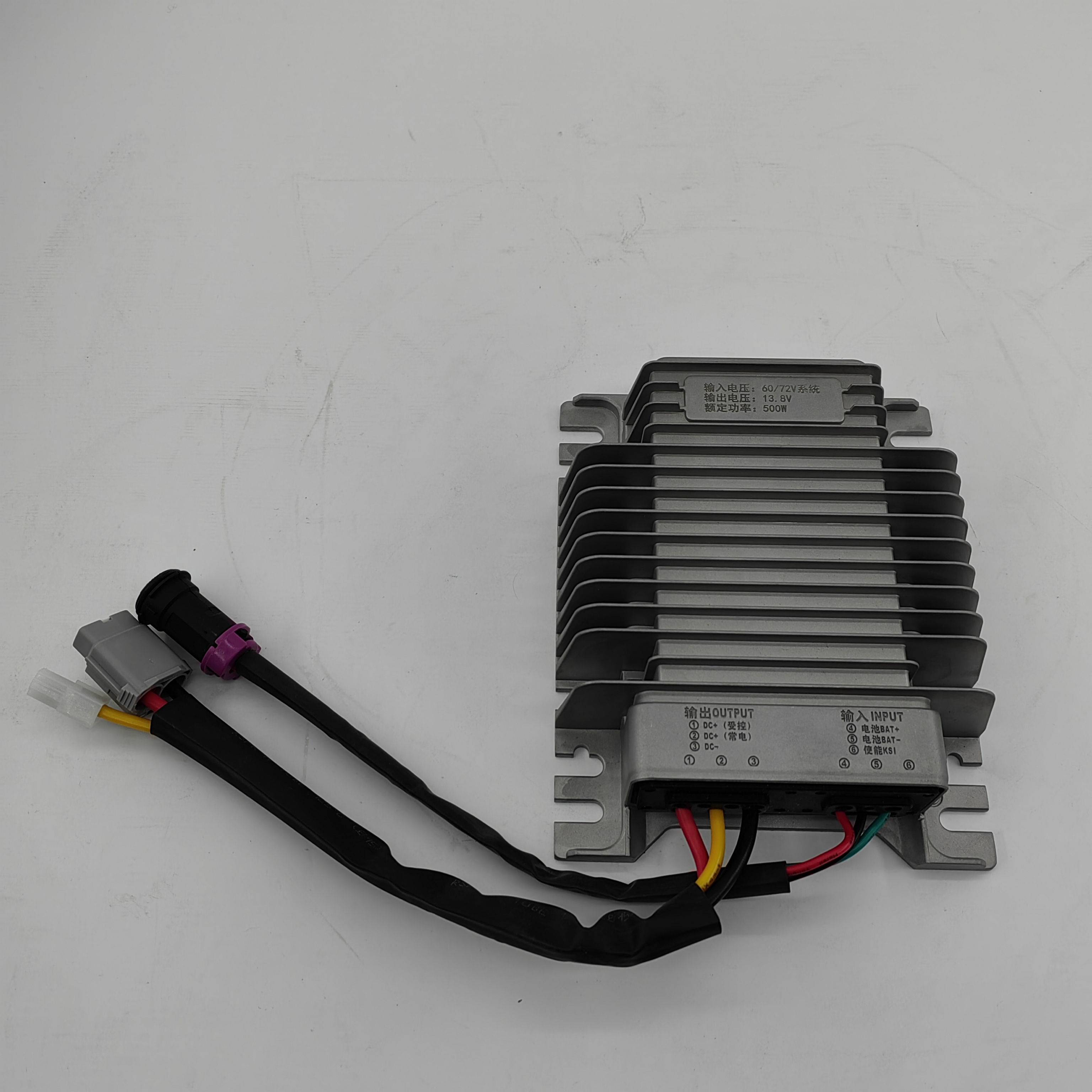
For example, in an electric vehicle, the high-voltage battery needs to supply power to various low-voltage systems, such as lights and infotainment systems. A DC-DC converter steps down the high voltage to a safe level for these components, ensuring they operate reliably.
Energy efficiency is a critical concern in today’s technology-driven world. DC-DC converters play a vital role in improving energy efficiency in electronic devices. Unlike linear regulators, which dissipate excess voltage as heat, switching converters minimize energy loss during voltage conversion. This efficiency is particularly important in battery-operated devices, where every bit of energy saved can extend battery life.
For instance, a smartphone equipped with an efficient DC-DC converter can maximize battery usage, allowing users to enjoy longer usage times between charges. Similarly, in renewable energy applications, such as solar power systems, DC-DC converters optimize the energy harvested from solar panels, ensuring it is effectively used or stored.
DC-DC converters are crucial components in modern electronics, enabling the conversion of one DC voltage level to another. They can be broadly categorized into two main types: linear regulators and switching regulators. Each type has its own unique characteristics, advantages, and disadvantages, making them suitable for different applications.
Linear regulators are the simplest form of DC-DC converters. They function by reducing the output voltage relative to the input voltage. Their design typically includes three terminals: input, output, and ground (GND).
Advantages:
Simplicity: The circuit design is straightforward, making them easy to implement.
Low Noise: They produce minimal electrical noise, which is beneficial for sensitive applications like audio equipment.
Disadvantages:
Efficiency: Linear regulators often have low power conversion efficiency, especially when there is a significant difference between input and output voltages. Excess voltage is dissipated as heat, which can lead to thermal management issues.
Limited Output Current: They may not handle high output currents effectively, making them less suitable for high-power applications.
Switching regulators are more complex but provide higher efficiency than linear regulators. They work by rapidly turning a switch on and off to control voltage levels. This method allows for better energy management and is especially useful in battery-operated devices.
Advantages:
High Efficiency: Switching regulators can achieve efficiencies above 90%, significantly reducing energy loss.
High Output Current Handling: They can manage higher currents, making them suitable for demanding applications.
Disadvantages:
Noise Generation: The high-frequency switching can introduce electrical noise, which may interfere with sensitive components.
Complex Design: The circuit design is more intricate, requiring careful consideration of components and layout.
Buck converters are a type of switching regulator specifically designed to lower the input voltage. For example, they can convert a 12V input to a 5V output. This functionality is essential in many applications, such as powering microcontrollers or charging batteries from a higher voltage source.
Boost converters, on the other hand, increase the input voltage to a higher output voltage. For instance, they can take a 3V input and step it up to 5V. This type is commonly used in applications like solar energy systems, where the voltage from solar panels may need to be increased for effective energy transfer.
Bidirectional converters combine the functionalities of both buck and boost converters. They can either step up or step down the voltage as needed. This versatility makes them ideal for applications where the input voltage may vary widely, such as in battery management systems for electric vehicles.
Charge pumps are another type of DC-DC converter that uses capacitors to store and transfer charge, allowing for voltage conversion without inductors. They are often used in low-power applications where efficiency is less critical.
DC-DC converters are vital in mobile devices like smartphones and tablets. They ensure that the battery voltage is efficiently converted to levels suitable for various components. For example, a smartphone battery might operate at 3.7V, but the processor and display might require 1.8V or 5V. The DC-DC converter steps down or steps up the voltage accordingly, allowing these devices to function optimally. This not only enhances performance but also extends battery life, as the converters operate with high efficiency.
In household appliances, DC-DC converters play a crucial role in managing power requirements. Devices like robot vacuum cleaners, electric toothbrushes, and shavers rely on these converters to ensure stable operation. For instance, a robot vacuum cleaner may use a 14.8V battery but needs to power its motors and sensors at lower voltages. The DC-DC converter adjusts the voltage, ensuring safe and efficient operation. Additionally, these converters help minimize energy wastage, making appliances more energy-efficient.
The automotive industry, particularly electric vehicles (EVs), heavily depends on DC-DC converters. EVs typically have high-voltage traction batteries, often ranging from 400V to 800V, which power the vehicle's electric motor. However, many auxiliary systems, such as lighting, infotainment, and control units, require lower voltages, often around 12V. DC-DC converters step down the high voltage to the required levels, ensuring that all components receive the correct power. This not only protects sensitive electronics from overvoltage but also enhances energy efficiency by optimizing power distribution.
DC-DC converters are also widely used in industrial applications. They are found in automation systems, robotics, and various control systems. These converters help manage power supply for sensors, actuators, and controllers, ensuring that each component operates at its optimal voltage. For instance, in a factory setting, a DC-DC converter might take a 24V input from a power supply and convert it to 5V for microcontrollers and sensors. This flexibility allows for easier integration of different devices and improves overall system efficiency.
Tip: When integrating DC-DC converters into your applications, consider the specific voltage requirements of each component to ensure optimal performance and energy efficiency.
When selecting a DC-DC converter, several critical factors come into play. Understanding these considerations ensures that the converter you choose will meet the specific requirements of your application while maintaining efficiency and performance.
Efficiency is paramount when choosing a DC-DC converter. It measures how effectively the converter transforms input voltage to output voltage without wasting energy. Higher efficiency translates to less energy loss, which is especially important in battery-operated devices where every bit of energy counts.
However, efficiency often comes at the cost of noise levels. Switching regulators, for instance, are highly efficient but can generate significant electrical noise due to their high-frequency operation. This noise can interfere with sensitive electronics, so it's essential to weigh the efficiency against the acceptable noise levels for your application.
Understanding the output current requirements is crucial. Each electronic device has specific current demands, and the DC-DC converter must be able to supply this current at maximum load conditions. Check the converter’s datasheet to ensure it meets or exceeds the required output current for your application. If the converter is under-rated, it could lead to instability or failure of the device it powers.
The operating voltage range of the DC-DC converter is another essential consideration. Ensure that the converter can handle the entire input voltage range expected in your application. For example, if your device operates between 5V and 12V, the converter should accommodate this range to maintain reliable performance. A converter with a too-narrow voltage range may not function correctly under varying conditions.
Output voltage accuracy is vital for the proper functioning of electronic devices. If the converter does not provide the correct output voltage, it can lead to device malfunctions or even permanent damage. Check the specifications for output voltage range and accuracy to confirm they align with the needs of your application. A converter that offers tight voltage regulation will help ensure that your devices operate reliably and efficiently.
DC-DC converters play a crucial role in voltage conversion, regulation, and energy efficiency for various electronic devices. They come in different types, including linear and switching regulators, each suited for specific applications. These converters are essential in mobile devices, household appliances, electric vehicles, and industrial systems. Keller offers innovative DC-DC converter solutions that enhance performance and efficiency, providing reliable power management for diverse applications. Their products deliver unique benefits, ensuring optimal functionality and energy savings in modern technology.
A: A DCDC converter is a device that converts one direct current (DC) voltage level to another, ensuring electronic devices receive the correct voltage for optimal operation.
A: A DCDC converter improves energy efficiency by minimizing energy loss during voltage conversion, particularly in battery-operated devices, thus extending battery life.
A: A DCDC converter is essential in electric vehicles to step down high-voltage battery power to lower voltage levels required by auxiliary systems.
A: Using a DCDC converter ensures stable voltage regulation, enhances energy efficiency, and protects sensitive electronic components from voltage fluctuations.
A: To troubleshoot a DCDC converter, check the input and output voltage levels, inspect for overheating, and ensure proper component connections for optimal performance.