
- All
- Product Name
- Product Keyword
- Product Model
- Product Summary
- Product Description
- Multi Field Search
Views: 0 Author: Site Editor Publish Time: 2026-02-10 Origin: Site


Many people see the term 3 bank on board battery charger and feel confused.
Does it mean higher power, more batteries, or something else?This article explains what the term really means and why it is often misunderstood.
You will learn how banks work and how clear definitions prevent setup mistakes.
A 3 bank on board battery charger is a permanently installed charging device designed to supply power to three independent charging banks from a single AC input. Each bank functions as a separate charging circuit with its own positive and negative leads, allowing the charger to monitor voltage, regulate current, and apply appropriate charging stages individually. This architecture is specifically intended for systems where multiple batteries play different roles and should not be treated as a single charging load.
From a system perspective, the key concept is independence rather than quantity. A 3 bank on board battery charger does not simply “split power three ways.” Instead, it behaves like three coordinated chargers housed in one unit, each responding to the condition of the battery (or battery group) connected to it. This design reduces charging imbalance, shortens recovery time, and supports consistent battery performance across the entire system, especially when batteries are discharged at different rates.
The term “on board” describes how the charger is integrated into the system rather than how it performs electrically. An on board charger is hard-mounted inside a boat, RV, or equipment compartment and wired directly to the batteries it serves. Once installed, daily charging typically requires only plugging the AC input into shore power or a generator, eliminating the need to move chargers or manually reconnect clamps. This fixed installation also lowers the risk of wiring errors and encourages more consistent charging habits.
To fully understand what the charger manages, it is essential to clarify the meaning of a battery bank. In charging terminology, a battery bank refers to the electrical load connected to one charging output. That load may consist of a single battery or multiple batteries connected in parallel so they behave as one larger-capacity unit. The charger regulates the bank as a whole and does not differentiate between individual batteries inside a parallel group.
Term | What It Describes | What It Does Not Describe |
Charging bank | One independent output circuit from the charger | Battery chemistry or voltage level |
Battery | A single energy storage unit | Automatically a separate bank |
Battery bank | One or more batteries acting as one load | Multiple charging outputs |
A common misunderstanding is assuming that one bank always equals one battery, which is not technically accurate. A charging bank is defined by the charger’s internal circuitry, not by the number of batteries physically connected. As long as batteries are wired in parallel and share the same voltage characteristics, they can be treated as a single bank from the charger’s point of view. This distinction becomes important when interpreting specifications or planning wiring layouts.
In the most straightforward configuration, one bank serves one battery, which simplifies diagnostics and ensures each battery receives individualized charging attention. However, in capacity-driven systems, users may connect two or more identical batteries in parallel to increase runtime. In that scenario, a single bank charges the entire group as one unit, applying the same charging profile to all batteries simultaneously. This approach works best when the batteries are closely matched in age, type, and condition.
Confusion often increases when series wiring enters the discussion. Wiring batteries in series raises system voltage, but it does not increase the number of charging banks available. A 3 bank on board battery charger still has only three outputs, regardless of whether those outputs are connected to 12-volt batteries or to series-connected battery strings. Misinterpreting this relationship can lead to incorrect expectations about system capability, which is why separating the concepts of banks, batteries, and wiring methods is essential for proper charger selection and system design.
At its core, a 3 bank on board battery charger operates as three electrically isolated chargers housed within a single unit. Each bank has its own output circuit, meaning voltage sensing, current regulation, and charge termination are handled independently. This electrical isolation is critical because it prevents one battery’s condition from influencing how another battery is charged, even though all banks share the same AC power input. In practical terms, the charger constantly evaluates each bank as a standalone load rather than averaging behavior across the system.
This independent-circuit design becomes especially important in real-world systems where batteries are rarely discharged evenly. One battery may power engine starting, another may support electronics, and a third may be lightly used or recently replaced. Because each bank operates autonomously, the charger can deliver different charging currents and timelines simultaneously, ensuring that each battery reaches a proper state of charge without being limited by the weakest or strongest battery in the group.
Charging is typically managed through multi-stage charging logic, applied separately to each bank. While exact profiles vary by battery type, the underlying principle is consistent: each bank progresses through charging stages based on its own voltage and acceptance rate, not on the status of neighboring banks. This separation helps avoid premature float charging or prolonged bulk charging that can shorten battery life.
Charging Stage | What the Charger Is Doing | Why Bank-Level Control Matters |
Bulk | Delivering maximum safe current | One battery can bulk charge while others do not |
Absorption | Holding voltage steady as current tapers | Prevents overcharging full batteries |
Float / Maintenance | Maintaining charge at low current | Keeps fully charged banks stable |
Another advantage of this approach is how the charger reacts when batteries are at different charge levels. If one battery is deeply discharged while another is nearly full, the charger does not slow down or speed up globally. Instead, the depleted battery remains in bulk or absorption mode, while the nearly full battery transitions to float. This behavior is often misunderstood, but it is one of the defining benefits of multi-bank chargers and a key reason they are used in complex power systems.
A frequent question is how many batteries a 3 bank charger can actually handle, and the answer depends on how batteries are grouped electrically, not simply on how many physical batteries exist. In the most straightforward configuration, each bank connects to one battery, resulting in three batteries being charged independently. This setup offers maximum clarity and the highest level of individual control.
However, a single bank can also charge multiple batteries wired in parallel, provided those batteries act as one electrical unit. In a parallel configuration, voltage remains the same while capacity increases, allowing one bank to manage a group of batteries safely as long as they are well matched. From the charger’s perspective, this parallel group appears as a single larger battery, and all charging decisions are made at the bank level rather than the individual battery level.
Series wiring often creates confusion in this context. Connecting batteries in series increases system voltage, but it does not increase the number of charging banks available. A 3 bank on board battery charger still has only three outputs, regardless of whether those outputs are connected to individual 12-volt batteries or to higher-voltage series strings. Understanding this distinction helps prevent incorrect assumptions about capacity, compatibility, and charging behavior, and ensures the charger is applied within its intended design limits.
A 3 bank on board battery charger becomes the right choice when an electrical system is designed around separate battery roles rather than sheer battery quantity. The key factor is how differently each battery is used and discharged during normal operation. When batteries serve distinct purposes and experience unequal load patterns, independent charging control is no longer a convenience but a functional requirement for system stability and battery longevity.
Systems that genuinely require three banks usually have three clearly defined electrical functions, each relying on its own battery or battery group. In these layouts, charging everything together would blur important differences in discharge depth, recovery time, and maintenance needs. A three-bank setup allows each function to be supported without compromise.
Common layouts that justify three independent banks often include:
● A dedicated starting battery that remains mostly full but must always be ready on demand.
● A house or auxiliary battery that experiences long, steady discharge cycles from electronics or onboard systems.
● A third battery supporting intermittent or high-draw equipment that drains unpredictably.
What makes these layouts suitable for a 3 bank charger is not the number of batteries, but the difference in how and when energy is consumed. Independent banks ensure that frequent deep cycling on one battery does not affect how another battery is maintained.
From a system-design perspective, the difference between 2 bank and 3 bank chargers is about charging behavior flexibility, not just expansion capacity. A 2 bank charger can independently manage two loads well, but it requires at least one battery role to share charging logic if a third role exists. This sharing often leads to uneven aging or inconsistent readiness.
Aspect | 2 Bank Charger | 3 Bank Charger |
Independent charging logic | Two distinct behaviors | Three fully isolated behaviors |
Battery role separation | Limited to two roles | Supports three unique roles |
Long-term balance | Requires compromises | Maintains role-specific charging |
With a 3 bank charger, each battery can age according to its actual workload rather than being influenced by another battery’s usage pattern. Over time, this difference becomes visible in reliability, especially in systems that are used frequently or under varying conditions.
A 3 bank charger is not always necessary, and using one in a simple system can add complexity without measurable benefit. A 2 bank charger is sufficient when the system naturally groups into only two functional roles and those roles have predictable discharge behavior.
This is often the case when:
● One battery is reserved for starting functions.
● A second battery or parallel battery group supports all auxiliary loads together.
In such setups, adding a third bank does not improve charging effectiveness unless a truly separate battery role is introduced. Parallel battery groups, even when composed of multiple physical batteries, still behave as a single load and therefore only require one charging bank.
Future expansion is where the decision between two and three banks often becomes strategic rather than technical. Systems that are likely to gain additional electronics, accessories, or backup power sources may eventually develop uneven discharge patterns that were not present at the time of initial installation.
A 3 bank on board battery charger offers structural flexibility. It allows a new battery to be added later without forcing it to share a charging profile that was designed for a different role. In this sense, the third bank acts as a buffer against redesign, preserving system clarity and simplifying future upgrades while maintaining consistent charging behavior across all batteries.
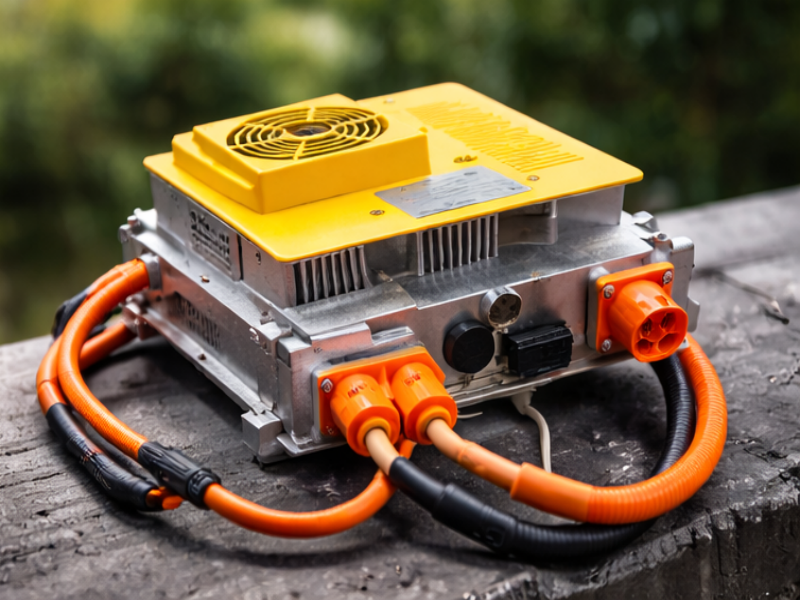
Misunderstandings around a 3 bank on board battery charger usually come from assuming that “bank” describes electrical strength rather than charging structure. These misconceptions often lead users to choose chargers based on incorrect expectations about voltage, power output, or compatibility with certain battery wiring methods. Clarifying these points helps align charger selection with actual system requirements rather than marketing terminology.
One of the most persistent misconceptions is believing that the number of banks determines the voltage level of the system. In reality, bank count and system voltage are completely separate concepts. A 3 bank charger can be used in low-voltage or higher-voltage systems depending on how the batteries are wired, but the bank count itself has no influence on voltage.
The charger simply provides three independent charging outputs. Each output operates at the voltage required by the battery or battery group connected to it. Whether those batteries are part of a 12 V, 24 V, or higher-voltage system depends on external wiring, not on the number of banks built into the charger. Confusing these concepts often results in users expecting voltage conversion or step-up functionality that the charger is not designed to provide.
Another common assumption is that a 3 bank charger delivers more total charging power than chargers with fewer banks. While some multi-bank chargers do have higher combined output, the presence of three banks alone does not guarantee greater power delivery. What matters is how much current each bank can supply and how that current is distributed.
Charger Feature | What It Actually Represents |
Number of banks | How many batteries or battery groups can be charged independently |
Amperage per bank | How fast each connected battery can be charged |
Total charger output | The combined capacity across all banks |
In practice, a 3 bank charger may simply divide its capacity across three outputs, rather than increasing overall charging speed. This distinction is important for managing expectations, especially when charging deeply discharged batteries that require sustained current over time.
Charging banks are also frequently confused with series battery strings, particularly in systems that operate at higher voltages. Wiring batteries in series increases system voltage, but it does not create additional charging banks. A single bank connected to a series string still treats that string as one electrical load.
This confusion often leads users to believe they need more banks simply because their batteries are wired in series. In reality, the charger only “sees” the combined characteristics of the string connected to each bank. Understanding this separation between wiring configuration and charger architecture prevents misapplication and ensures that the charger is used within its intended design parameters, rather than being expected to manage functions it was never built to handle.
A 3 bank on board battery charger means three independent charging circuits, not higher voltage or more power.
Understanding this definition helps users read specifications correctly and avoid wiring or selection errors.With clear system planning, users can choose chargers that match real battery needs and future expansion.
Companies like Keller offer well-designed charging solutions that support reliable performance and long-term value.
A: A 3 bank on board battery charger controls three independent charging circuits, not battery voltage or system power.
A: A 3 bank on board battery charger can charge three batteries or three parallel battery groups independently.
A: A 3 bank on board battery charger treats a series battery string as one load, not multiple banks.