- All
- Product Name
- Product Keyword
- Product Model
- Product Summary
- Product Description
- Multi Field Search
Views: 0 Author: Site Editor Publish Time: 2026-05-07 Origin: Site
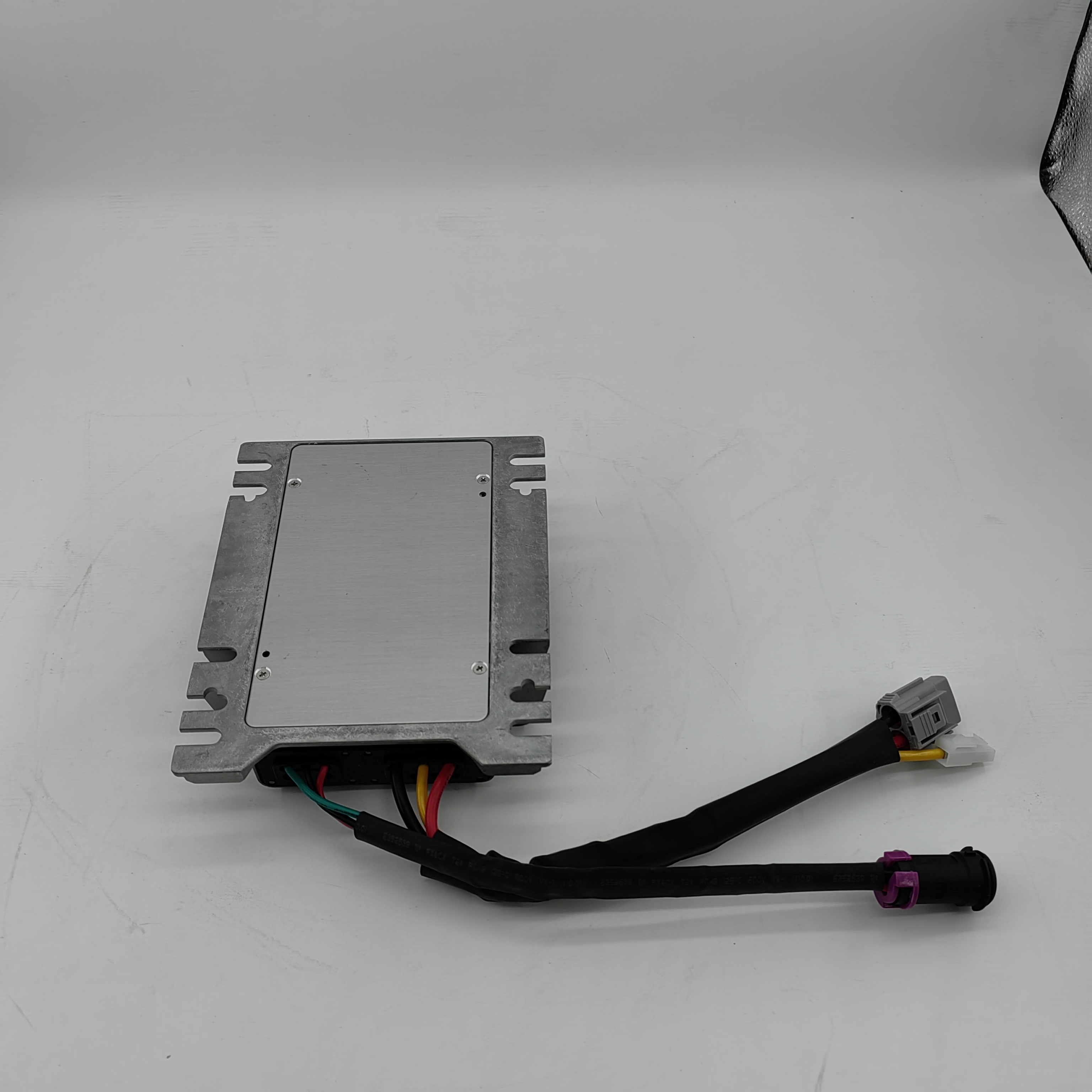
Have you ever wondered how your devices manage power so efficiently? DC/DC converters are key players in modern electronics, enabling voltage adjustments for various applications. In this article, we’ll explore what DC/DC converters are, their importance, and the diverse applications they serve in today’s technology-driven world.
DC/DC converters are vital in power management, allowing for efficient voltage conversion in electronic devices. They come in two main types: linear and switching converters. Each type has its unique characteristics and applications.
Linear converters operate by using linear components to maintain a constant output voltage. They adjust the resistance in the circuit to regulate voltage. The key features of linear converters include:
Simplicity: They have a straightforward design, making them easy to implement.
Low Noise: Linear converters produce minimal electrical noise, making them suitable for sensitive applications.
Efficiency: However, they are less efficient at high voltage differences, as they dissipate excess voltage as heat.
Example of Linear Converter: A Low Dropout (LDO) regulator can maintain a regulated output voltage with minimal voltage drop, making it ideal for battery-powered devices.
Switching converters use high-speed electronic switches to control energy transfer, making them more versatile and efficient than linear converters. They are capable of stepping voltage up or down and can handle a broader range of input and output voltages. Key features include:
High Efficiency: Switching converters can achieve efficiencies of up to 95% due to their ability to minimize energy loss during conversion.
Complexity: These converters are more complex, requiring additional components like inductors and capacitors for energy storage and filtering.
Noise Generation: They can generate electromagnetic interference (EMI) due to rapid switching, which may require careful design considerations.
Types of Switching Converters:
Buck Converter (Step-Down): This converter reduces the input voltage to a lower output voltage. It’s commonly used in battery-powered devices where lower voltages are needed.
Boost Converter (Step-Up): This converter increases the input voltage to a higher output voltage. It’s useful for applications like LED drivers and power supplies needing to raise voltage.
Buck-Boost Converter: This converter can either increase or decrease the input voltage, depending on the needs of the application. It’s versatile for devices that operate under varying voltage conditions.
SEPIC Converter: Similar to buck-boost converters, SEPIC converters can step up or down voltage while maintaining the same polarity. They're often used in battery-operated systems.
Flyback Converter: An isolated converter that can step up or down voltage, providing electrical isolation between input and output. It’s widely used in low-power adapters.
Type | Function | Applications |
|---|---|---|
Buck | Steps down voltage | Battery chargers, power supplies |
Boost | Steps up voltage | LED drivers, power supplies |
Buck-Boost | Steps up or down voltage | Versatile applications |
DC/DC converters are essential for transforming one level of direct current (DC) voltage to another. They accomplish this by storing energy temporarily in inductors or capacitors and then releasing it at a different voltage level. The operation relies on switching elements like transistors or MOSFETs that rapidly turn on and off, controlled by pulse-width modulation (PWM) signals.
When the switch is closed, energy flows into the inductor, building up a magnetic field. Once the switch opens, the inductor releases this stored energy, adding to the input voltage to boost the output. Conversely, in a buck converter, the switch's rapid cycling reduces the voltage. This process happens thousands of times per second, allowing the converter to maintain a stable output voltage, even when the input voltage fluctuates.
Inductors and capacitors are crucial for energy storage in DC/DC converters. Inductors store energy in a magnetic field when current passes through them. They resist changes in current, making them ideal for smoothing out voltage fluctuations in the circuit.
Capacitors, on the other hand, store energy in an electric field. They help filter out voltage spikes and provide a steady output voltage. In a typical converter, the inductor and capacitor work together to manage energy flow, ensuring a smooth and stable output.
For example, in a buck converter, when the switch is on, the inductor charges up. When the switch turns off, the inductor releases its energy to the load through the capacitor, which keeps the output voltage stable.
Feedback mechanisms are vital for maintaining the desired output voltage in DC/DC converters. These systems continuously monitor the output voltage and make necessary adjustments to the switching process. A common feedback method involves using a voltage divider to sample the output voltage and compare it to a reference voltage.
If the output voltage drifts from the desired level, the feedback circuit adjusts the duty cycle of the PWM signal. For instance, if the output voltage falls below the target, the PWM controller increases the pulse width, allowing more energy to reach the output. This closed-loop system ensures that the converter can adapt to changes in input voltage, load conditions, and temperature, providing a reliable and stable output.
DC/DC converters have several essential components that ensure their efficient operation and reliability. Understanding these components helps in designing and selecting the right converter for specific applications. Let’s explore the main components of DC/DC converters.
Filters are crucial for both the input and output of DC/DC converters.
Input Filters: These filters reduce electromagnetic interference (EMI) and voltage ripple from the input source. They typically consist of capacitors and inductors. Capacitors smooth out voltage fluctuations, acting as energy reservoirs. Inductors resist changes in current, helping to create a low-pass filter that allows the DC component to pass while blocking high-frequency noise.
Output Filters: Similar to input filters, output filters ensure a stable output voltage by smoothing out ripple and noise after the conversion process. These filters also use capacitors and inductors, tailored to the specific requirements of the application. For precision devices, more complex filter designs may be necessary to achieve low ripple voltage.
The power switching stage is the heart of a DC/DC converter. It converts the input DC voltage to the desired output voltage using power switches, typically MOSFETs (Metal-Oxide-Semiconductor Field-Effect Transistors) or IGBTs (Insulated Gate Bipolar Transistors).
MOSFETs: These are popular due to their fast switching speeds and low on-resistance. They can quickly turn on and off, enabling efficient power conversion. When a MOSFET is on, current flows through an inductor, storing energy in its magnetic field. When it turns off, the energy stored in the inductor is released, maintaining current flow to the output.
IGBTs: These switches combine the high efficiency of MOSFETs with the high-voltage capabilities of bipolar transistors. They are often used in high-power applications where higher voltage ratings are necessary.
Control circuits are vital for regulating the output voltage of DC/DC converters. They continuously monitor the output voltage and adjust the switching pattern of the power switches to maintain the desired voltage level.
Pulse-Width Modulation (PWM) Controllers: A common type of control circuit, PWM controllers generate pulses of varying widths. By changing the pulse width, they control the average voltage applied to the load. If the output voltage is too low, the controller increases the pulse width, allowing more energy to flow to the output.
Protection Features: Control circuits often include safety features like over-voltage protection (OVP), under-voltage protection (UVP), over-current protection (OCP), and over-temperature protection (OTP). These features ensure the converter operates safely under various conditions, preventing damage to the converter or connected equipment.
Efficiency is a critical factor in the performance of DC/DC converters. It determines how much input power is effectively converted to output power without wasting energy. Several factors influence efficiency:
Switching Losses: These occur when the power switches (like MOSFETs or IGBTs) turn on and off. The faster the switching, the lower the losses, but higher frequencies can also lead to increased electromagnetic interference (EMI).
Conduction Losses: These losses happen when current flows through the switches and other components. The on-resistance of MOSFETs significantly impacts this, as higher resistance leads to more heat generation and reduced efficiency.
Core Losses in Inductors: Inductors store energy and are key components in converters. Core losses occur due to magnetic hysteresis and eddy currents within the inductor material. Selecting high-quality materials can minimize these losses.
Capacitor Losses: Capacitors also contribute to efficiency losses, especially when they have high Equivalent Series Resistance (ESR). Low ESR capacitors can help improve overall efficiency.
Load Conditions: The efficiency can vary with different load levels. Typically, converters operate at peak efficiency at specific load conditions. Deviation from this can lead to reduced efficiency.
Load regulation and line regulation are essential performance metrics for DC/DC converters.
Load Regulation: This refers to the converter's ability to maintain a constant output voltage despite changes in load current. A well-designed converter should exhibit minimal voltage variation when the load changes from no load to full load.
Line Regulation: This measures how well the output voltage remains stable when the input voltage fluctuates. Good line regulation ensures that variations in input voltage do not significantly affect the output voltage, providing consistent performance across different operating conditions.
Both load and line regulation are crucial for applications requiring stable voltage, such as in sensitive electronics and power supplies.
Transient response characteristics indicate how quickly a DC/DC converter can react to sudden changes in load or input voltage. This is particularly important in applications where rapid changes occur, such as in microprocessors or RF devices.
Response Time: The time it takes for the output voltage to settle to its new value after a load change. Faster response times are desirable for maintaining system stability.
Overshoot and Undershoot: These are the temporary spikes in voltage that can occur during load changes. Minimizing overshoot and undershoot is essential to protect sensitive components from damage.
To enhance transient response, designers often use larger output capacitors or advanced control techniques like current mode control, which can improve the converter's ability to respond quickly to load variations.
DC/DC converters play a crucial role in modern electronics, providing efficient voltage regulation for various applications. Their ability to step voltage up or down makes them indispensable in a range of industries, from automotive systems to renewable energy solutions and consumer electronics.
In the automotive sector, DC/DC converters are essential for managing power distribution. They convert high-voltage battery outputs, typically found in electric vehicles (EVs), to lower voltages needed for various onboard systems. For example, a 400V battery may be stepped down to 12V or 48V to power lights, infotainment systems, and control units. This conversion enhances the efficiency of energy use and ensures the safety of electrical components. Additionally, DC/DC converters manage power flow between batteries in hybrid and electric vehicles, improving overall vehicle efficiency and performance.
DC/DC converters are pivotal in renewable energy applications. They regulate and stabilize the output from solar panels and wind turbines, which often produce variable voltage levels. By converting these fluctuating voltages to a consistent level, DC/DC converters ensure that energy can be effectively stored in batteries or fed into the grid. Maximum Power Point Tracking (MPPT) converters are particularly important in solar applications, as they optimize energy harvest by adjusting the input voltage to the most efficient point for power output. This capability significantly enhances the overall efficiency of renewable energy systems.
In consumer electronics, DC/DC converters are ubiquitous. They power devices like smartphones, laptops, tablets, and wearable technology. These devices often require different voltage levels for various components, making DC/DC converters vital for efficient operation. For instance, a smartphone may use a boost converter to step up voltage from a battery to power its display while using a buck converter to step down voltage for charging. This versatility allows manufacturers to create smaller, lighter devices without compromising performance or battery life.
DC/DC converters are essential for efficient voltage management in various electronic devices. They consist of key components such as input and output filters, power switching stages, and control circuits. These elements work together to ensure stable performance and reliability in applications ranging from automotive systems to consumer electronics.
The future of DC/DC converter technology looks promising with advancements in materials like GaN and SiC, enhancing efficiency and compactness. Keller offers innovative DC/DC converter solutions that provide exceptional value, ensuring optimal performance across diverse applications.
A: A DCDC converter is an electronic device that converts one level of direct current (DC) voltage to another, enabling efficient power management in various applications.
A: A DCDC converter operates by storing energy in inductors or capacitors and then releasing it at a different voltage level using switching elements like MOSFETs.
A: Using a DCDC converter enhances efficiency and reliability by providing stable voltage levels, which is crucial for sensitive electronic devices.
A: Switching DCDC converters offer higher efficiency, versatility in handling various voltage levels, and better performance under varying load conditions.
A: To troubleshoot a DCDC converter, check for faulty components, ensure proper connections, and verify that input and output voltages are within expected ranges.