
- All
- Product Name
- Product Keyword
- Product Model
- Product Summary
- Product Description
- Multi Field Search
Views: 0 Author: Site Editor Publish Time: 2026-02-10 Origin: Site


Choosing the wrong supplier can quietly undermine charging reliability and system stability.
An On Board Battery Charger is not just a component. It shapes performance, safety, and long-term operation.
In this guide, you will learn how to evaluate suppliers, avoid common pitfalls, and focus on what truly matters.
An On Board Battery Charger sits at the intersection of power conversion, battery protection, and system coordination. Unlike external chargers that operate independently, an onboard solution is embedded into the system architecture and must function reliably across long service cycles. Its role extends beyond charging itself, influencing how energy is managed, how components interact, and how the overall system ages over time. Understanding this broader role is essential before any supplier or technical decision is made.
At its foundation, an On Board Battery Charger converts incoming AC power into controlled DC output tailored to the battery pack. However, in modern systems this function is tightly coupled with communication and control logic. The charger continuously exchanges data with the battery management system and higher-level controllers, adjusting charging behavior based on real-time conditions rather than static settings. This allows the system to respond dynamically to changes in temperature, state of charge, and input power quality.
From a functional perspective, the charger typically fulfills several intertwined responsibilities rather than a single task. These include regulated power delivery, safety monitoring, and system-level coordination. The diagram below summarizes how these functions interact within a typical onboard charging architecture:
Because these functions operate simultaneously, a weakness in one area can affect the entire system, reinforcing why the charger should be evaluated as a core subsystem rather than an accessory component.
Charging performance directly shapes battery aging patterns. Precise voltage control and smooth current transitions reduce chemical stress within cells, helping maintain capacity consistency across charge cycles. In contrast, chargers with coarse regulation or delayed feedback can introduce micro-stresses that accumulate over time, shortening usable battery life even if no immediate failures occur.
System efficiency is affected in parallel. Energy lost during conversion becomes heat, which must be dissipated by surrounding components. Excess heat not only wastes energy but also increases thermal load on enclosures, wiring, and nearby electronics. The table below links key charger performance characteristics to their long-term effects on both the battery and the overall system:
Performance Characteristic | Battery-Level Effect | System-Level Effect |
Voltage accuracy | Reduces overcharge and imbalance | Improves operational stability |
Current control smoothness | Slows capacity degradation | Lowers thermal stress |
Conversion efficiency | Preserves usable energy | Reduces cooling requirements |
Thermal management design | Limits heat-induced aging | Extends component lifespan |
These relationships explain why charger performance should be considered part of lifecycle cost and reliability analysis rather than a narrow electrical specification.
The role of an On Board Battery Charger changes significantly depending on where it operates. In electric mobility platforms, compact integration and electromagnetic compatibility are critical because the charger shares space with sensitive electronics. Here, efficiency and weight often compete with robustness, requiring careful design trade-offs. In industrial or fleet systems, priorities shift toward durability, tolerance for unstable power inputs, and ease of maintenance over long operating hours.
Environmental exposure further differentiates charger requirements. Systems operating in high humidity, dust, or vibration demand chargers with reinforced housings and conservative thermal margins, while controlled indoor systems may prioritize modularity and service access. The list below highlights how environment alters functional emphasis without changing the charger’s core purpose:
● Mobile environments require compact layouts, high power density, and strict interference control while maintaining consistent charging behavior under motion and vibration.
● Industrial settings emphasize reliability under continuous operation, resistance to electrical noise, and predictable behavior during power fluctuations.
● Harsh or outdoor conditions elevate the importance of sealing, corrosion resistance, and thermal stability, making mechanical design as important as electrical performance.
Defining requirements for an On Board Battery Charger is not a paperwork exercise, but a translation process between how the system is used and how the charger must behave. Article-level discussions often focus on electrical ratings, yet real-world performance depends on how those ratings interact with operating cycles, environmental exposure, and system architecture. A charger that aligns well with application realities reduces downstream risks in integration, maintenance, and battery degradation.
Battery chemistry determines the charging logic, but usage scenarios determine how often that logic is stressed. An On Board Battery Charger must accommodate not only the nominal battery type, voltage level, and current rating, but also how frequently charging occurs, at what depth of discharge, and under what thermal conditions. These factors collectively influence how conservative or aggressive charging parameters should be.
In practice, engineers often move from a specification-centric view to a scenario-based view. Rather than asking “What is the rated current?”, the more useful question becomes “How does current behave during repeated daily charging or partial charging cycles?”. The table below illustrates how specification data evolves when placed into a real usage context:
Requirement Dimension | Datasheet Perspective | Usage-Oriented Perspective |
Battery chemistry | Supported chemistry type | Sensitivity to frequent cycling and heat |
System voltage | Nominal voltage | Voltage variation under load and recovery |
Charging current | Maximum output | Sustainable current over long duty cycles |
This alignment step helps ensure the charger supports the battery throughout its intended service life, not just under ideal conditions.
Application context reshapes which technical parameters deserve the most attention. The same On Board Battery Charger design may perform acceptably in one environment and poorly in another if contextual constraints are ignored. Factors such as space availability, cooling strategy, and operational continuity all shift the balance between efficiency, robustness, and integration complexity.
Instead of treating context as an afterthought, it is useful to frame it as a priority-setting tool. For example, a system designed for continuous operation values thermal stability and predictable derating behavior, while a mobile platform may prioritize compactness and electromagnetic compatibility. These differences are not cosmetic; they influence component selection, layout decisions, and long-term reliability assumptions:
● High-utilization applications emphasize steady-state performance, controlled heat buildup, and predictable aging behavior across many cycles.
● Space-constrained systems focus on power density, integration flexibility, and minimizing interference with nearby electronics.
● Electrically noisy or variable environments require tolerance to input fluctuations and robust protective mechanisms rather than peak efficiency.
By framing priorities through context, requirement definitions become clearer and more defensible during supplier discussions.
A supplier’s technical value is revealed less by how closely they match a specification sheet and more by how well they interpret the application behind it. Specifications describe boundaries, but use cases explain behavior within those boundaries over time. Suppliers who engage deeply with how a system operates can anticipate integration challenges that are invisible at the specification level.
This distinction often emerges during early technical exchanges. Suppliers who ask about charging frequency, ambient temperature ranges, maintenance access, and system evolution signal an understanding of lifecycle realities. Those focused only on nominal ratings may deliver compliant hardware that later struggles in operation. Clearly defined, application-driven requirements therefore serve a dual purpose: they guide internal decision-making and act as a filter for identifying suppliers capable of supporting the system beyond initial deployment.
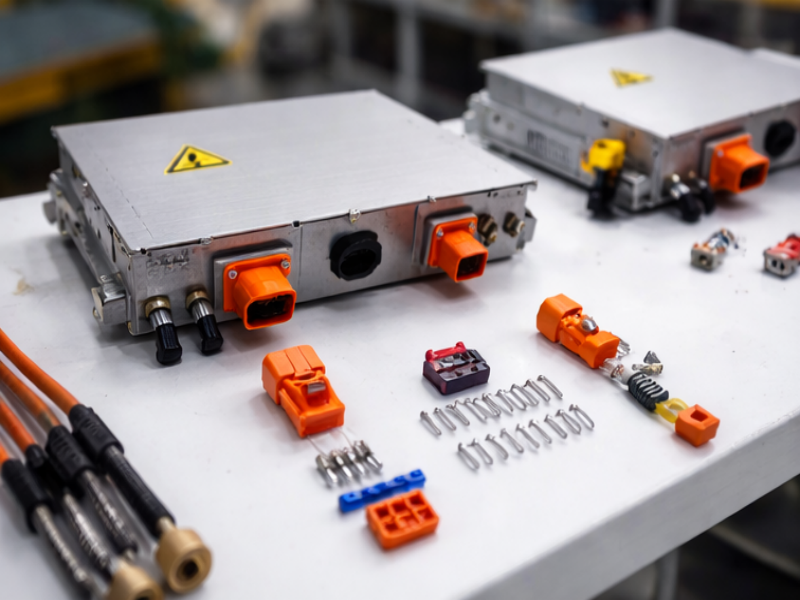
Evaluating an On Board Battery Charger supplier requires looking beyond product catalogs and headline specifications. At this stage, the focus shifts to whether a supplier can consistently translate technical requirements into reliable, repeatable outcomes across the charger’s full lifecycle. Strong suppliers demonstrate not only engineering competence, but also manufacturing discipline and the ability to support integration as systems evolve from concept to validation.
Technical expertise is best assessed through how a supplier approaches problem definition rather than how many models they offer. Engineering depth shows itself in the supplier’s ability to explain design trade-offs, charging algorithms, thermal strategies, and protection mechanisms in relation to specific applications. A supplier with genuine expertise can articulate why certain design decisions were made and how those decisions affect long-term system behavior.
In practical evaluation, this depth becomes visible during early technical discussions. Suppliers who can engage in scenario-based conversations—such as how charging behavior changes under partial loads or elevated temperatures—tend to contribute more effectively to system reliability. The following list outlines signals that typically indicate strong engineering capability:
● The ability to explain charging logic and control strategies without relying solely on datasheets.
● Willingness to discuss limitations and operating boundaries, not just ideal conditions.
● Evidence of cross-disciplinary understanding, including power electronics, thermal management, and system communication.
These indicators help distinguish suppliers who design with real-world use in mind from those who focus narrowly on specification compliance.
Even well-designed chargers can fail to deliver expected performance if manufacturing processes lack consistency. Supplier evaluation should therefore include an assessment of how design intent is preserved during production. Process transparency—how openly a supplier discusses quality controls, testing routines, and traceability—often correlates with long-term reliability in delivered products.
Manufacturing consistency is less about production volume and more about control. Suppliers who can describe how they manage component variation, assembly tolerances, and end-of-line testing provide clearer assurance that each charger behaves similarly in the field. The table below summarizes key manufacturing aspects that influence outcome reliability:
Manufacturing Aspect | Why It Matters | What to Look For |
Process control | Ensures repeatable performance | Defined inspection and test steps |
Component sourcing | Reduces variability risks | Approved supplier lists and traceability |
End-of-line testing | Detects latent defects | Functional and stress testing coverage |
Transparency in these areas allows buyers to evaluate risk proactively rather than reactively after deployment.
Integration support is a critical yet often underestimated supplier capability. An On Board Battery Charger rarely operates in isolation; it must integrate with batteries, control units, and system software. Suppliers who provide meaningful support during design and validation phases help reduce costly iteration cycles and late-stage design changes.
Effective integration support includes timely feedback on system architecture, guidance on interface requirements, and assistance during validation testing. Rather than acting as a passive component vendor, a capable supplier functions as a technical partner, identifying potential mismatches early. This collaborative approach is particularly valuable when system requirements evolve, as it helps maintain alignment between charger behavior and overall system objectives.
Quality standards and certifications provide a structured baseline for evaluating supplier capability. For an On Board Battery Charger, relevant standards typically address electrical safety, electromagnetic compatibility, and environmental performance. Compliance indicates that a supplier understands regulatory expectations and has implemented processes to meet them consistently.
However, certifications should be interpreted as entry requirements rather than differentiators. While they confirm adherence to defined criteria, they do not automatically guarantee suitability for a specific application. Understanding what each certification represents—and what it does not—helps place compliance in proper context:
● Safety standards confirm basic protection against electrical and thermal hazards.
● Performance standards verify behavior under defined test conditions.
● Regulatory approvals demonstrate readiness for specific markets or regions.
Recognizing the scope and limits of compliance prevents overreliance on certificates as proxies for real-world performance.
Documentation quality reflects how clearly a supplier understands and communicates their own products. Comprehensive, well-structured technical documentation enables smoother integration, easier troubleshooting, and more predictable maintenance over time. For complex systems, documentation often becomes the primary interface between supplier and system integrator.
Beyond documentation itself, responsiveness in technical communication is equally important. Suppliers who provide timely, precise answers to engineering-level questions reduce uncertainty during design and validation. Access to test reports, revision histories, and change notifications further strengthens confidence in long-term support. Together, these factors indicate whether a supplier is prepared to support the charger throughout its operational life, not just at the point of sale.
Choosing an On Board Battery Charger supplier is a system-level decision, not a simple purchase choice. It affects reliability, safety, and long-term performance.
This article highlights key principles for reducing technical and operational risk, from compatibility to lifecycle support and integration capability.
Companies like Keller deliver value through reliable charger solutions, strong engineering support, and services that help build sustainable sourcing strategies.
A: An On Board Battery Charger should be evaluated on compatibility, engineering support, manufacturing consistency, and long-term lifecycle risk.
A: An On Board Battery Charger must match battery chemistry, duty cycle, environment, and integration constraints specific to the use case.
A: Selecting an unsuitable On Board Battery Charger supplier can lead to compatibility issues, higher maintenance costs, and limited system scalability.