
- All
- Product Name
- Product Keyword
- Product Model
- Product Summary
- Product Description
- Multi Field Search
Views: 0 Author: Site Editor Publish Time: 2026-02-10 Origin: Site


A small metal panel can decide system reliability. Many ev charger failures start at the face plate. The metal face plate protects interfaces and users. Its material and design shape safety and performance.
In this article, you will learn key materials. You will also explore practical design options.
In an ev charger system, the metal face plate is a functional interface layer rather than a cosmetic element. It forms the direct boundary between internal electrical components and the external environment, which means its design decisions have immediate implications for protection, usability, and long-term stability. A well-designed face plate enables reliable user interaction while preserving enclosure performance, whereas a poorly defined one often becomes a weak point for sealing, alignment, or maintenance.
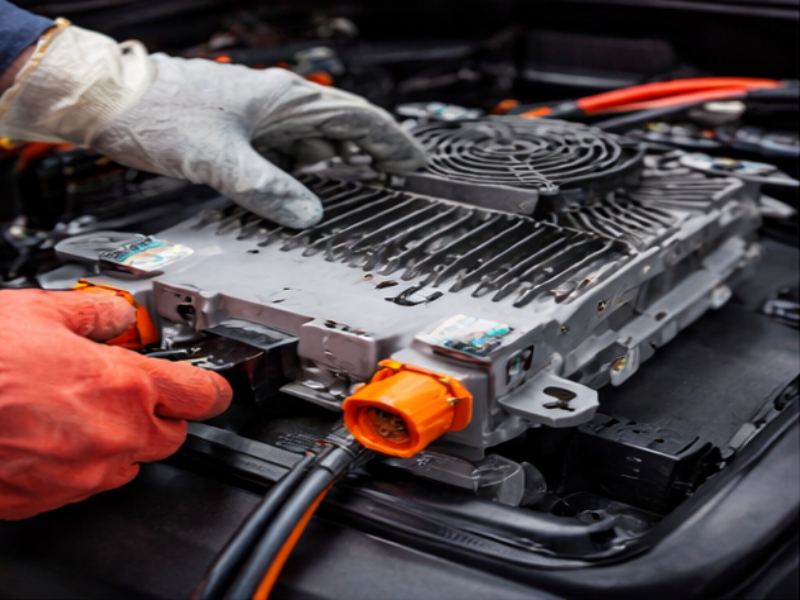
The face plate operates as the interaction-focused surface of the ev charger housing. Its primary role is to manage localized exposure created by openings for connectors, screens, buttons, and indicators—areas where the enclosure’s protective shell is intentionally interrupted. By reinforcing these zones, the face plate helps maintain mechanical stability and environmental resistance around the most frequently used parts of the charger.
From a system-level perspective, the face plate contributes to:
● Localized protection against dust, moisture, and incidental contact at interface points
● Mechanical support for components subjected to repeated physical interaction, such as plug insertion or button presses
● Distribution of stress away from sensitive internal components, reducing long-term fatigue
Because face plates are often removed during inspection or servicing, they must be designed for repeated handling without degrading sealing performance or dimensional accuracy over time.
A clear functional boundary between the face plate and the main enclosure is essential for efficient ev charger design. The enclosure body provides overall structural strength, mounting stability, and primary environmental sealing, while the face plate addresses interface-specific requirements. Assigning enclosure-level responsibilities to the face plate often results in unnecessary thickness, excess weight, or complex sealing structures that complicate manufacturing and maintenance.
The distinction between these roles can be summarized as follows:
Aspect | Face Plate Focus | Enclosure Focus |
Structural role | Local stiffness around openings | Overall rigidity and load-bearing |
Environmental protection | Sealing around interfaces | Global IP/NEMA protection |
User interaction | Displays, connectors, controls | Internal component isolation |
Service access | Removable or hinged access | Fixed structural shell |
Maintaining this separation allows both parts to be optimized independently, improving manufacturability and reducing the risk of design redundancy.
Cutouts define much of a face plate’s complexity. Openings for connectors, displays, and access panels introduce stress concentrations and sealing challenges, making dimensional accuracy critical. Poorly designed cutouts can cause misalignment, uneven gasket compression, or visible gaps that compromise both protection and perceived quality.
Effective face plate design typically addresses:
● Cutout geometry, using rounded corners and controlled edge radii to reduce stress and coating failure
● Mounting strategies, such as reinforced screw zones or threaded inserts, to prevent deformation during repeated servicing
● Tolerance management, accounting for coating thickness, thermal expansion, and assembly stack-up across multiple components
Rather than treating tolerances as a purely manufacturing concern, experienced designers consider them integral to functional reliability—especially for outdoor ev charger installations exposed to temperature fluctuations.
User-facing elements place concentrated demands on the face plate because they combine frequent interaction with strict protection requirements. Displays require flatness and precise alignment, connectors demand high local stiffness, and indicator lights must remain visible without introducing leak paths.
To balance these needs, designers often rely on a combination of:
● Reinforced zones behind high-load areas such as charging connectors
● Localized sealing features that protect individual openings without overloading the entire plate
● Controlled transitions in material thickness to maintain rigidity while limiting unnecessary weight
When these considerations are addressed cohesively, the metal face plate allows the ev charger to feel solid and intuitive to users while quietly preserving enclosure performance. Its effectiveness is reflected not in visual prominence, but in how seamlessly function, interface, and fit are integrated into the overall charging system.
Material choice is one of the most consequential decisions in ev charger face plate design because it directly affects thermal behavior, mechanical durability, corrosion resistance, and long-term maintenance. While multiple metals can technically be used, aluminum and stainless steel dominate real-world applications due to their predictable performance and compatibility with enclosure manufacturing processes. Understanding how and why each material is selected helps align design decisions with installation environment and usage intensity.
Aluminum is widely used in ev charger face plates because of its favorable strength-to-weight ratio and manufacturing flexibility. A lightweight aluminum face plate reduces handling effort during installation and lowers stress on mounting points, which is especially valuable for wall-mounted chargers or modular housing systems. From a production standpoint, aluminum is easier to machine, bend, and finish, enabling tighter tolerances around cutouts for displays, connectors, and access panels.
Beyond weight advantages, aluminum offers excellent thermal conductivity, allowing the face plate to participate in passive heat dissipation. While it is not a primary heat sink, an aluminum face plate can help spread localized heat away from interface areas, supporting more stable internal temperatures when combined with a properly designed enclosure. This characteristic makes aluminum particularly suitable for chargers operating at sustained power levels.
Aluminum face plates are most effective in environments where:
● Weight and ease of installation are priorities
● Heat dissipation needs to be supported without adding complexity
● Corrosion exposure is moderate and controlled through surface treatments such as anodizing or powder coating
When properly finished, aluminum provides a balanced solution for residential, commercial, and many outdoor ev charger installations.
Stainless steel face plates are chosen when mechanical strength and environmental resilience outweigh concerns about weight or manufacturing cost. Compared to aluminum, stainless steel offers higher resistance to impact, deformation, and deliberate tampering, making it well suited for public or semi-public charging locations where physical abuse is a realistic risk.
One of stainless steel’s defining advantages is its intrinsic corrosion resistance, particularly in grades commonly used for outdoor equipment. In coastal regions, industrial sites, or high-humidity environments, stainless steel maintains structural integrity and surface stability without relying heavily on coatings. This reduces the risk of corrosion initiating at cut edges, fastener interfaces, or worn surface areas.
Stainless steel is typically justified over aluminum when:
● Chargers are installed in coastal or chemically aggressive environments
● Vandal resistance and rigidity are primary design drivers
● Long-term surface stability is required with minimal dependence on coatings
The trade-off is increased weight and more demanding fabrication, which must be considered early in enclosure and mounting design.
Choosing between aluminum and stainless steel is less about identifying a “better” material and more about matching material behavior to real operating conditions. Environment, exposure level, and usage patterns should guide material selection before aesthetic or cost considerations.
The table below summarizes how these materials align with common decision factors:
Decision Factor | Aluminum Face Plate | Stainless Steel Face Plate |
Weight & handling | Lightweight, installer-friendly | Heavy, requires stronger mounting |
Thermal behavior | High thermal conductivity | Low thermal conductivity |
Corrosion resistance | Dependent on surface treatment | Intrinsic, highly stable |
Impact resistance | Moderate | High |
Maintenance profile | Periodic surface inspection | Minimal surface maintenance |
Material decisions also influence long-term maintenance expectations. Aluminum face plates rely more heavily on coating integrity, meaning surface damage or wear may require attention over time. Stainless steel, while heavier, generally offers longer service intervals with fewer cosmetic or structural concerns in harsh environments.
Design choices for a metal face plate determine how well an ev charger performs over time, especially in demanding installation environments. Geometry, surface treatment, and environmental adaptation work together to influence rigidity, sealing reliability, corrosion resistance, and user perception. Rather than treating design as a purely visual exercise, effective face plate design balances structural logic with functional constraints imposed by real-world operation.
The geometry of a metal face plate directly affects its stiffness and resistance to deformation. Thin panels may reduce material cost and weight, but insufficient thickness can lead to flexing around connector openings or display cutouts, which in turn compromises sealing and alignment. For most ev charger applications, thickness is selected not only for static strength but also for resistance to repeated stresses caused by plug insertion, door opening, and thermal cycling.
Edge design and forming features play an equally important role. Bends, flanges, and return edges significantly increase panel stiffness without adding excessive material. Reinforcement ribs or localized thickening around high-load areas—such as charging connector mounts—help distribute forces more evenly and prevent long-term fatigue. Well-designed geometry allows the face plate to remain stable across temperature changes while maintaining consistent gasket compression and interface alignment.
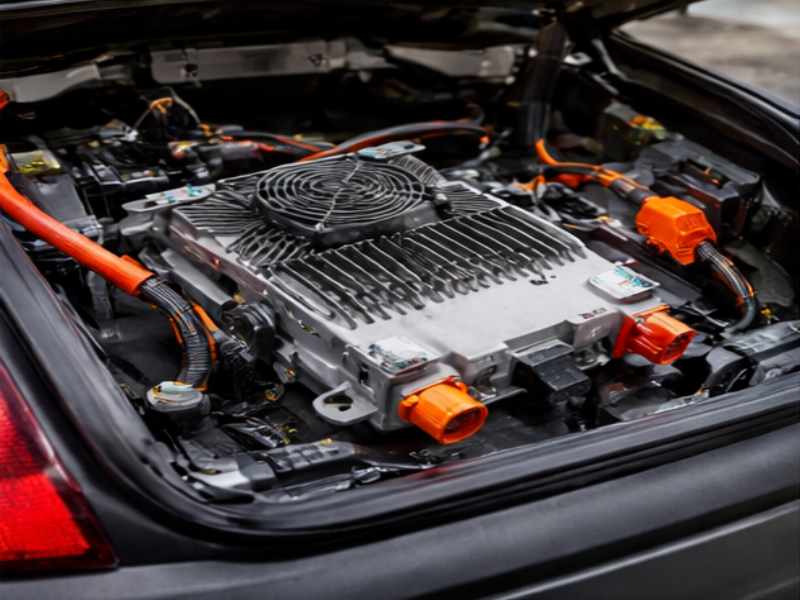
Surface treatment is not merely a cosmetic decision; it is a functional layer that protects the face plate from environmental degradation. Powder coating and anodizing are commonly used to enhance corrosion resistance and improve surface durability, while brushed finishes are sometimes chosen to reduce the visibility of minor scratches in public-facing installations. Each finish interacts differently with the base material and operating environment.
Beyond appearance, finishes influence how the face plate responds to UV exposure, abrasion, and chemical contact. For example, UV-stable coatings help prevent fading or chalking in outdoor installations, while harder anodized layers improve wear resistance around frequently touched areas. These treatments also affect maintenance behavior, as damaged coatings may require inspection or repair to preserve long-term performance.
Finish Type | Primary Benefit | Functional Consideration |
Powder coating | Broad corrosion protection | Requires careful edge coverage |
Anodizing | Hard, wear-resistant surface | Limited to aluminum substrates |
Brushed metal | Reduced scratch visibility | Minimal added corrosion protection |
Outdoor installations impose additional constraints on metal face plate design due to exposure to rain, dust, UV radiation, and temperature fluctuations. Moisture management becomes critical around openings, where water ingress can occur if sealing surfaces deform or coatings degrade. Face plates must therefore be designed to support consistent gasket compression and controlled drainage paths without trapping water.
Alignment with IP and NEMA protection expectations is achieved not through the face plate alone, but through its interaction with seals, fasteners, and the main enclosure. Design details such as recessed openings, overlapping edges, and protected fastener heads help reduce direct exposure to environmental stress. In regions with extreme climates—such as coastal, cold, or high-heat areas—design adaptations may include thicker panels, enhanced coatings, or corrosion-resistant fasteners to maintain reliability over time.
One of the most frequent design pitfalls is prioritizing visual minimalism at the expense of functional robustness. Ultra-thin panels or flush surfaces may look refined but often lack the stiffness needed to maintain sealing integrity under repeated use. Similarly, ignoring environmental context during material or finish selection can lead to premature corrosion, coating failure, or deformation.
Another common issue is introducing unnecessary complexity that complicates assembly or maintenance. Overly intricate cutouts, excessive fastener variation, or poorly defined sealing interfaces increase the risk of misalignment and long-term reliability problems. Effective design avoids these pitfalls by aligning geometry, finish, and environmental requirements early in the design process, ensuring the metal face plate supports the ev charger’s performance throughout its service life.
Material and design choices define how an ev charger face plate performs. They affect protection, stability, and long-term reliability.
Selecting the right metal depends on environment and use. Balanced design avoids failure and reduces maintenance risk.
Keller supports this process with reliable metal solutions. Their products deliver durability, precision, and practical value.
A: The metal face plate protects interfaces, supports components, and helps the ev charger maintain sealing, alignment, and durability.
A: Aluminum suits most ev charger designs for weight and heat dissipation, while stainless steel fits harsh or vandal-prone environments.
A: Proper geometry and sealing around cutouts help an ev charger meet IP or NEMA requirements in outdoor installations.
A: Yes, material choice affects corrosion resistance and wear, shaping how often an ev charger requires inspection or service.