- All
- Product Name
- Product Keyword
- Product Model
- Product Summary
- Product Description
- Multi Field Search
Views: 0 Author: Site Editor Publish Time: 2026-05-07 Origin: Site
Have you ever wondered how electronic devices manage different voltage levels? DC/DC converters play a crucial role in this process. In this article, we’ll explore what DC/DC converters are, their importance in modern electronics, and the various applications they serve. Get ready to dive into the world of efficient power management!
DC/DC converters are essential devices in modern electronics, converting one DC voltage level to another efficiently. They operate by using inductors, capacitors, and switching elements to manage energy flow. The basic operation involves switching elements, like transistors, that rapidly turn on and off. When the switch is closed, energy is stored in an inductor or capacitor. When it opens, this stored energy is released at the desired voltage level.
The efficiency of this process is critical. High-efficiency converters can achieve conversion rates of up to 95%. This efficiency minimizes energy loss, which is especially important in battery-operated devices, as it extends battery life and reduces heat generation.
There are three primary types of DC/DC converters, each serving different voltage conversion needs:
Buck Converter (Step-Down): This converter reduces the input voltage to a lower output voltage. It is commonly used in applications where devices require lower voltage, such as stepping down 12V to 5V for battery-powered devices.
Boost Converter (Step-Up): A boost converter increases the input voltage to a higher output voltage. It's useful in applications like LED drivers or power supplies that need to raise voltage, for example, converting 5V to 12V.
Buck-Boost Converter: This versatile converter can either increase or decrease the input voltage depending on the requirements. It's beneficial in situations where the input voltage may fluctuate above or below the desired output.
Each type has its unique applications and efficiency characteristics, making it important to select the right converter based on the specific needs of the system.
Switching elements play a pivotal role in the operation of DC/DC converters. These components, typically transistors, are responsible for controlling the flow of current through the converter. By rapidly switching on and off, they regulate the energy transfer to the output.
The choice of switching element affects the converter's efficiency, thermal performance, and overall reliability. Modern converters often use advanced materials like Gallium Nitride (GaN) and Silicon Carbide (SiC) for these elements. These materials enable higher switching frequencies and lower losses, contributing to improved efficiency and compact designs.
Efficiency is a critical factor for DC/DC converters. It reflects how well a converter transforms input power into usable output power. High-performance DC/DC converters can achieve efficiency ratings of up to 95% or more. This means only a small percentage of energy is lost as heat during conversion.
Why does this matter? In battery-operated devices, higher efficiency translates to longer battery life. For industrial applications, it leads to reduced energy costs and better overall system performance. An efficient converter minimizes thermal management issues, allowing devices to operate cooler and more reliably.
Thermal management is essential for maintaining the performance and longevity of DC/DC converters. As these devices operate, they generate heat. If not managed properly, excessive heat can lead to failure or reduced efficiency.
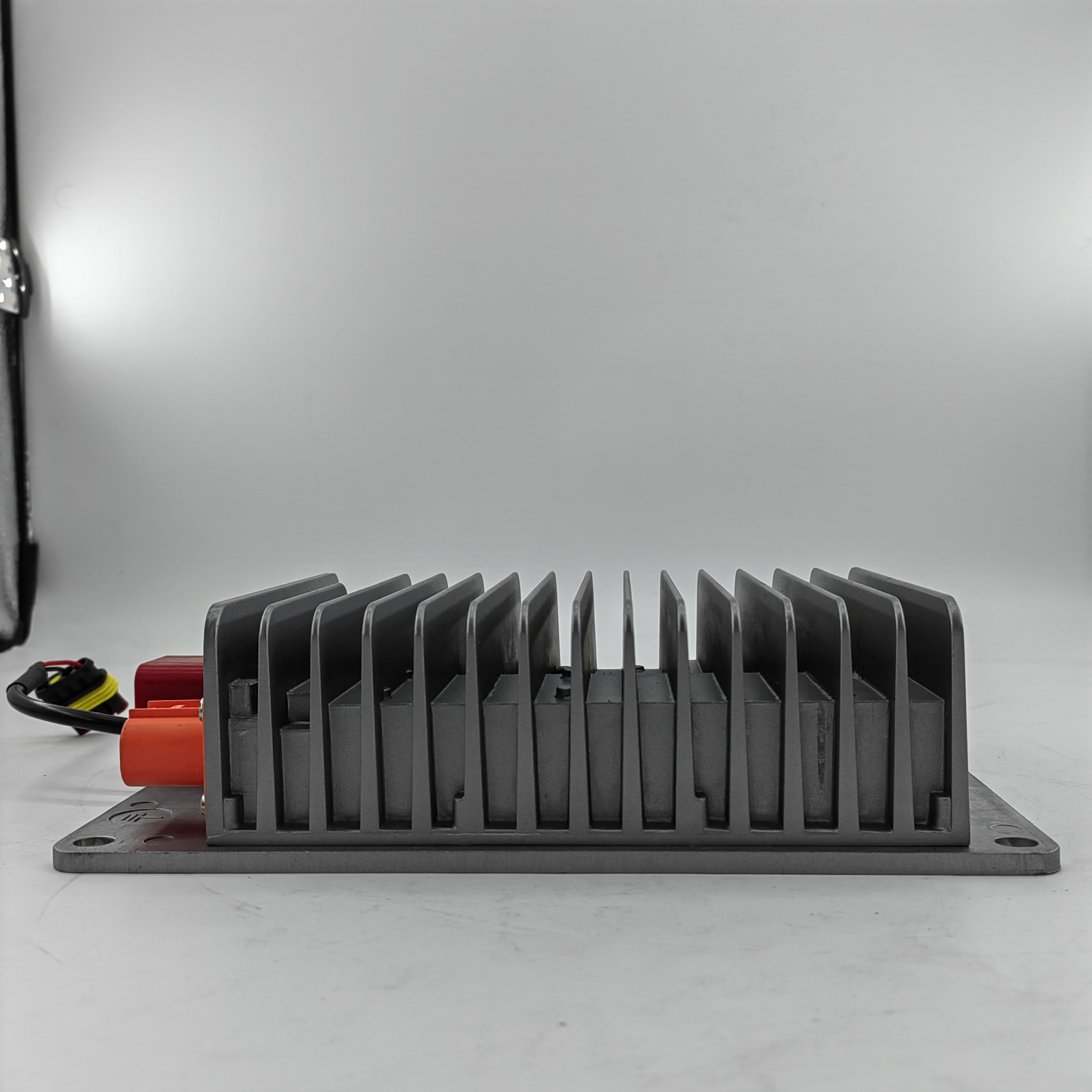
High-performance converters often incorporate advanced thermal management techniques. These can include heat sinks, thermal pads, and even active cooling systems in high-power applications. By effectively dissipating heat, these converters ensure stable operation and prolong lifespan.
For example, when designing a converter for an electric vehicle, engineers must consider the thermal environment. The converter must handle high currents while maintaining efficiency and reliability, especially in compact spaces.
Modern DC/DC converters are designed to be compact and lightweight. This is particularly important in applications where space is limited, such as in portable electronics or electric vehicles. A smaller design allows for easier integration into various systems without compromising performance.
Compact converters often utilize advanced materials and innovative designs. For instance, the use of Gallium Nitride (GaN) and Silicon Carbide (SiC) semiconductors enables higher switching frequencies. This results in smaller inductors and capacitors, further reducing the overall size of the converter.
The benefits of a compact design include:
Space Savings: Ideal for small devices where every millimeter counts.
Weight Reduction: Lighter devices are easier to handle and transport.
Improved Performance: Smaller components can lead to faster switching times and better efficiency.
When it comes to DC/DC converters, understanding the difference between isolated and non-isolated types is crucial. Non-isolated converters are simpler and more cost-effective, but they lack the safety features necessary for high-voltage applications. Isolated converters, on the other hand, provide galvanic isolation, making them suitable for demanding environments where safety and reliability are paramount.
Isolated DC/DC converters achieve electrical separation between input and output using transformers or opto-isolators. This isolation prevents electrical faults from transferring between circuits, which is particularly important in applications involving sensitive equipment or high voltages. For instance, medical devices often rely on isolated converters to ensure patient safety, while industrial equipment benefits from reduced noise interference.
Non-isolated converters do not use transformers, making them compact and efficient. They are ideal for applications where space is limited, such as in consumer electronics. However, they are generally less safe in high-voltage scenarios, as the input and output share a common ground. This can lead to potential hazards if a fault occurs.
Isolated DC/DC converters find their applications in various sectors, particularly where safety and reliability are critical. Here are some common applications:
Medical Equipment: Ensuring patient safety is paramount in medical devices. Isolated converters help mitigate risks associated with electrical shocks and ensure stable power supply to sensitive components.
Industrial Automation: In industrial settings, isolated converters are used to power control systems and sensors. They provide clean and stable power, which enhances the performance of machinery and reduces electromagnetic interference (EMI).
Telecommunications: Isolated converters are essential in communication equipment, where they help maintain signal integrity and prevent noise from affecting data transmission.
Renewable Energy Systems: In solar and wind energy applications, isolated converters optimize energy harvesting and ensure that the output voltage is suitable for battery storage or grid integration.
Safety is a critical aspect of DC/DC converter design, especially for isolated types. Here are some key considerations:
Galvanic Isolation: Ensure that the input and output are electrically isolated to prevent faults from propagating. This is achieved through the use of transformers or opto-isolators.
Component Quality: Use high-quality components that can withstand high voltages and temperatures. This helps to minimize the risk of failure and improve reliability.
Thermal Management: Implement effective thermal management strategies to dissipate heat generated during operation. Overheating can lead to component failure and safety hazards.
Regulatory Compliance: Adhere to industry standards and regulations for safety and performance. This includes certifications for medical devices, industrial equipment, and telecommunications systems.
In summary, the choice between isolated and non-isolated DC/DC converters depends on the specific requirements of the application. Isolated converters offer safety and reliability, making them suitable for sensitive and high-voltage applications. Non-isolated converters, while compact and efficient, are best for environments where safety is less of a concern.
Tip: When selecting a DC/DC converter, assess the safety requirements of your application to determine whether an isolated or non-isolated design is appropriate.
DC/DC converters are versatile devices crucial for various applications across multiple industries. They efficiently convert one DC voltage level to another, playing a vital role in optimizing energy management and ensuring reliable power delivery. Here’s a closer look at some key areas where DC/DC converters are making a significant impact.
In the renewable energy sector, DC/DC converters are essential for maximizing energy output from sources like solar panels and wind turbines. They adjust the variable voltage produced by these sources to a stable level suitable for battery storage or grid integration.
Solar Energy: Photovoltaic systems utilize DC/DC converters to ensure efficient conversion of solar energy into usable power. These converters often employ Maximum Power Point Tracking (MPPT) technology to optimize energy harvesting.
Wind Energy: Similar to solar applications, wind turbines rely on DC/DC converters to stabilize the fluctuating voltage generated during operation, ensuring consistent power delivery.
In the automotive industry, particularly with the rise of electric vehicles (EVs), DC/DC converters are crucial for power management. They help manage the distribution of electrical power from high-voltage battery systems to various low-voltage components.
Battery Management: DC/DC converters convert high-voltage DC from the main battery to lower voltages needed for auxiliary systems like lighting, infotainment, and control units.
Energy Efficiency: Efficient power conversion reduces energy loss, enhancing the overall performance and range of electric vehicles. For instance, a converter might step down 400V from the main battery to 12V for standard vehicle electronics.
DC/DC converters are widely used in industrial environments to ensure reliable power supply for various machinery and automation systems. They help maintain consistent voltage levels, which is critical for the operation of industrial equipment.
Automation Systems: In manufacturing plants, DC/DC converters power sensors, control units, and automated guided vehicles, ensuring smooth operations.
Power Supply for Equipment: These converters provide stable voltage to machinery, helping to prevent malfunctions and extend equipment lifespan. For example, they can be used in robotics to ensure precise control and operation.
In navigation systems, particularly in aerospace applications, DC/DC converters provide stable power to avionics. This stability is crucial for ensuring safety and reliability during flight operations.
Power Stability: DC/DC converters help maintain voltage levels during power fluctuations, enhancing the reliability of navigation equipment. They stabilize power in avionics systems, ensuring smooth operation even in challenging conditions.
Navigating the world of DC/DC converters can be complex, especially with the myriad of options available. Professional consultation services can provide valuable insights tailored to your specific application needs. Experts can help you understand the nuances of different converter types, their efficiencies, and the best practices for integration into your systems. Whether you are working on a renewable energy project, automotive application, or industrial automation, consulting with professionals can streamline your decision-making process.
A wealth of resources is available for those looking to deepen their understanding of DC/DC converters. Online platforms, including manufacturer websites, industry forums, and technical papers, offer comprehensive guides on converter types, applications, and performance metrics. Many manufacturers provide detailed datasheets, application notes, and design guides that cover everything from efficiency ratings to thermal management strategies. Additionally, webinars and workshops can provide hands-on learning experiences, allowing you to engage with industry experts and peers.
If you need assistance or have specific questions about DC/DC converters, reaching out to experts is straightforward. Many manufacturers and distributors have dedicated support teams ready to assist you. You can typically contact them via email, phone, or through their websites. When reaching out, be prepared to provide details about your project, including your power requirements, desired efficiency levels, and any specific constraints you may have. This information will help them provide you with the most relevant and effective solutions.
DC/DC converters are essential for efficiently managing power in various applications. They convert DC voltage levels, offering types like buck, boost, and buck-boost converters. Their efficiency is crucial, particularly in battery-operated devices, as it extends battery life and reduces heat. Isolated converters provide safety for high-voltage applications, while non-isolated versions are compact and cost-effective. Keller offers innovative DC/DC converter solutions that enhance performance and reliability, making them a valuable choice for your power management needs. Explore Keller's offerings to find the right converter for your project.
A: A DCDC converter is a device that efficiently converts one DC voltage level to another, utilizing inductors, capacitors, and switching elements for energy management.
A: A DCDC converter works by using switching elements, like transistors, to rapidly turn on and off, storing energy in inductors or capacitors and releasing it at the desired voltage.
A: DCDC converters are crucial in renewable energy systems as they stabilize and optimize voltage output from sources like solar panels and wind turbines for efficient energy management.
A: When selecting a DCDC converter, consider factors like input and output voltage requirements, efficiency ratings, thermal management, and size constraints to ensure optimal performance.
A: The benefits of using a DCDC converter include improved energy efficiency, extended battery life in devices, and the ability to manage varying voltage levels effectively.